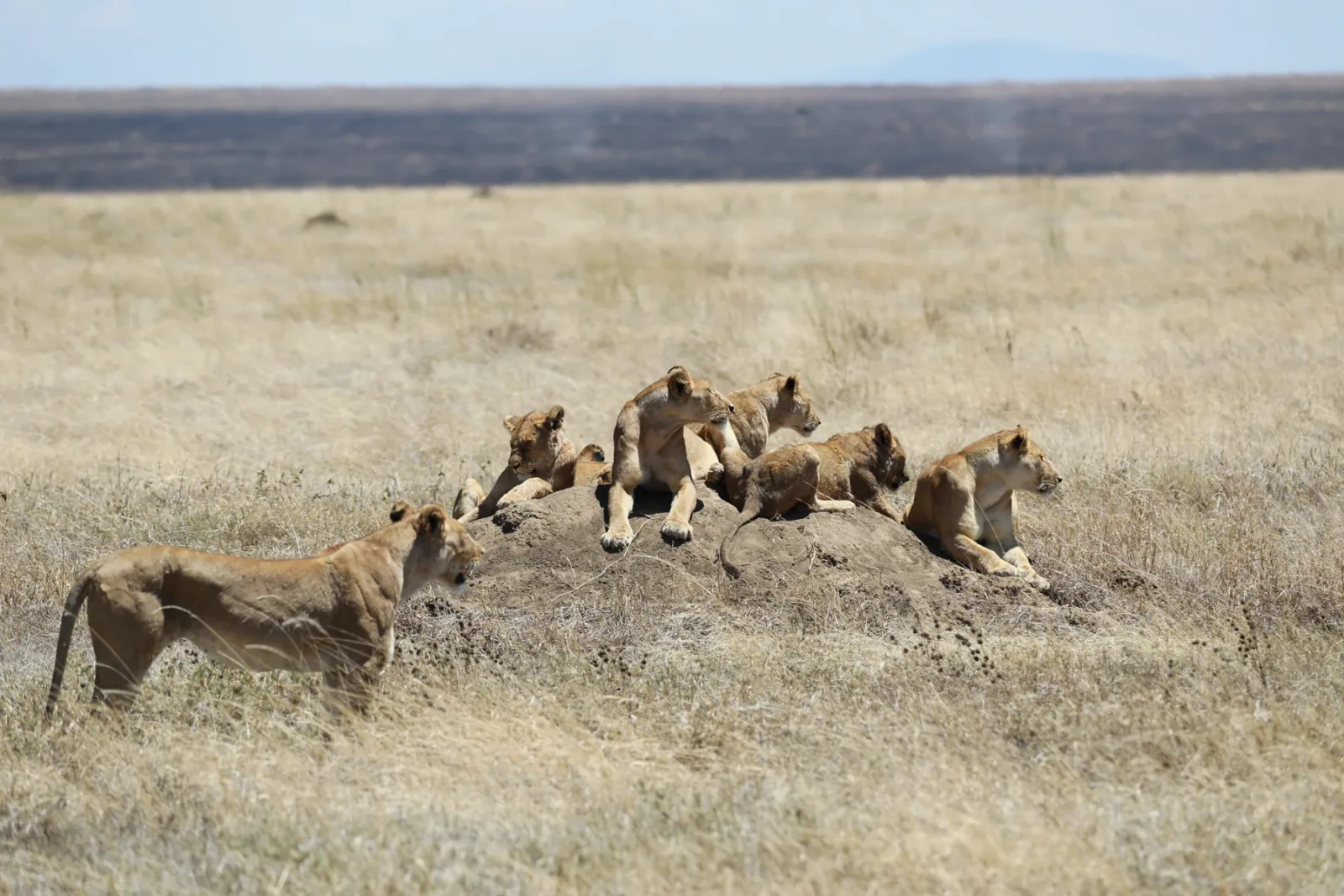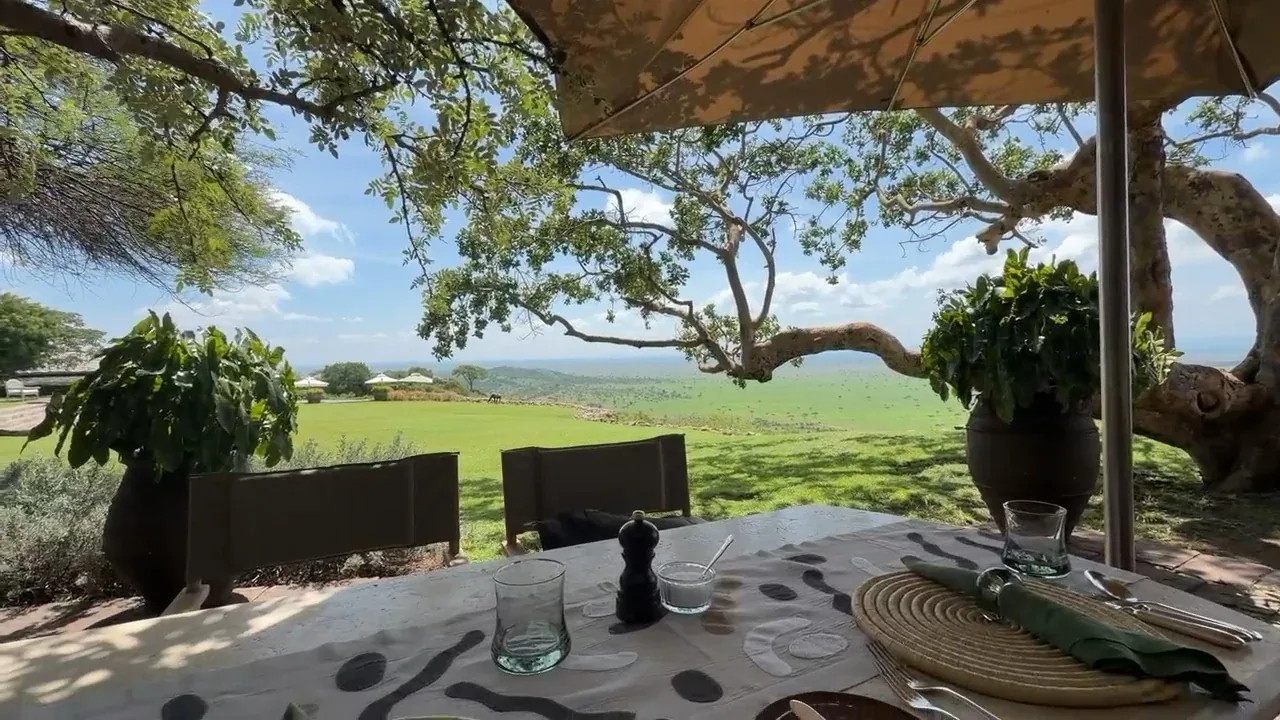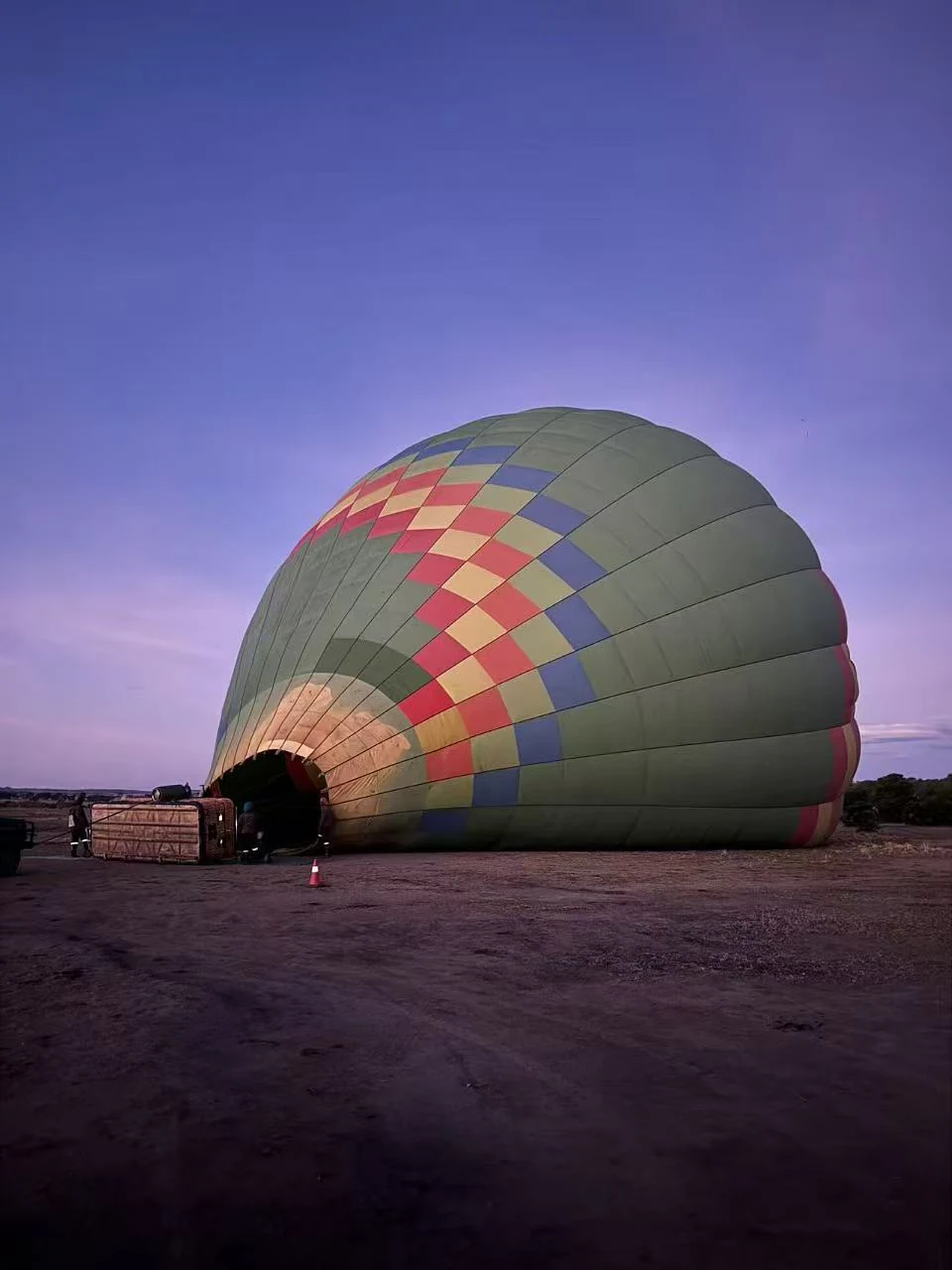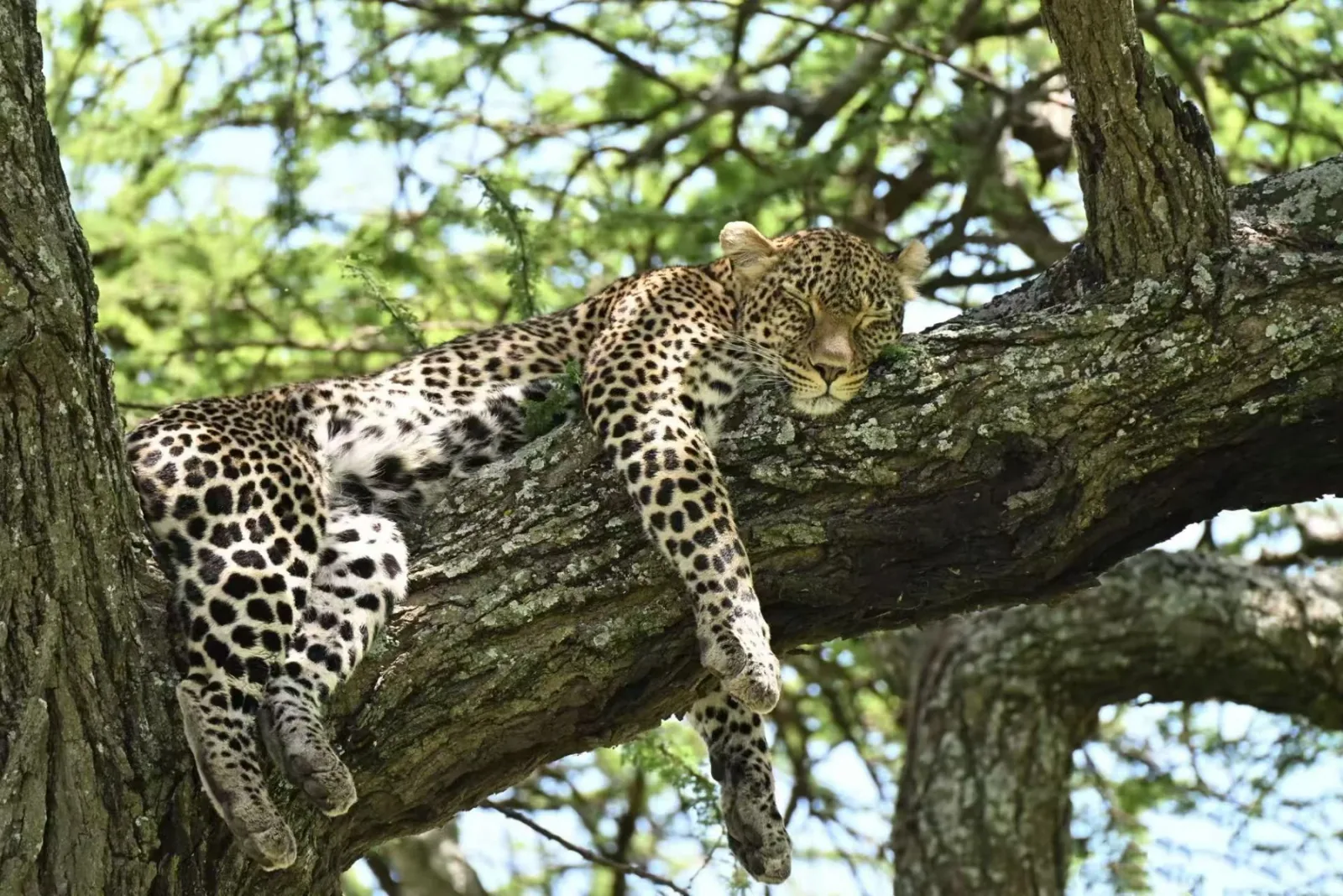
Channels curl around palm islands and floodplains give way to woodland. Water and dry land are interwoven in Botswana's Okavango Delta, and where you stay shapes the safari. The Kays family runs six Jao Reserve camps in the heart of the delta, spread across islands and different habitats. The area is home to elephants, leopards and abundant birdlife. Explore by game vehicle, canoe or on foot. Jao Camp has spacious suites and private villas. Tubu Tree sits on drier Hunda Island, and Little Tubu keeps things intimate with three rooms. Pelo and Jacana each have distinct island and channel settings, while Kwetsani kept its treehouse feel when rebuilt in 2026.
Jao Camp | Suites and villas on a private island
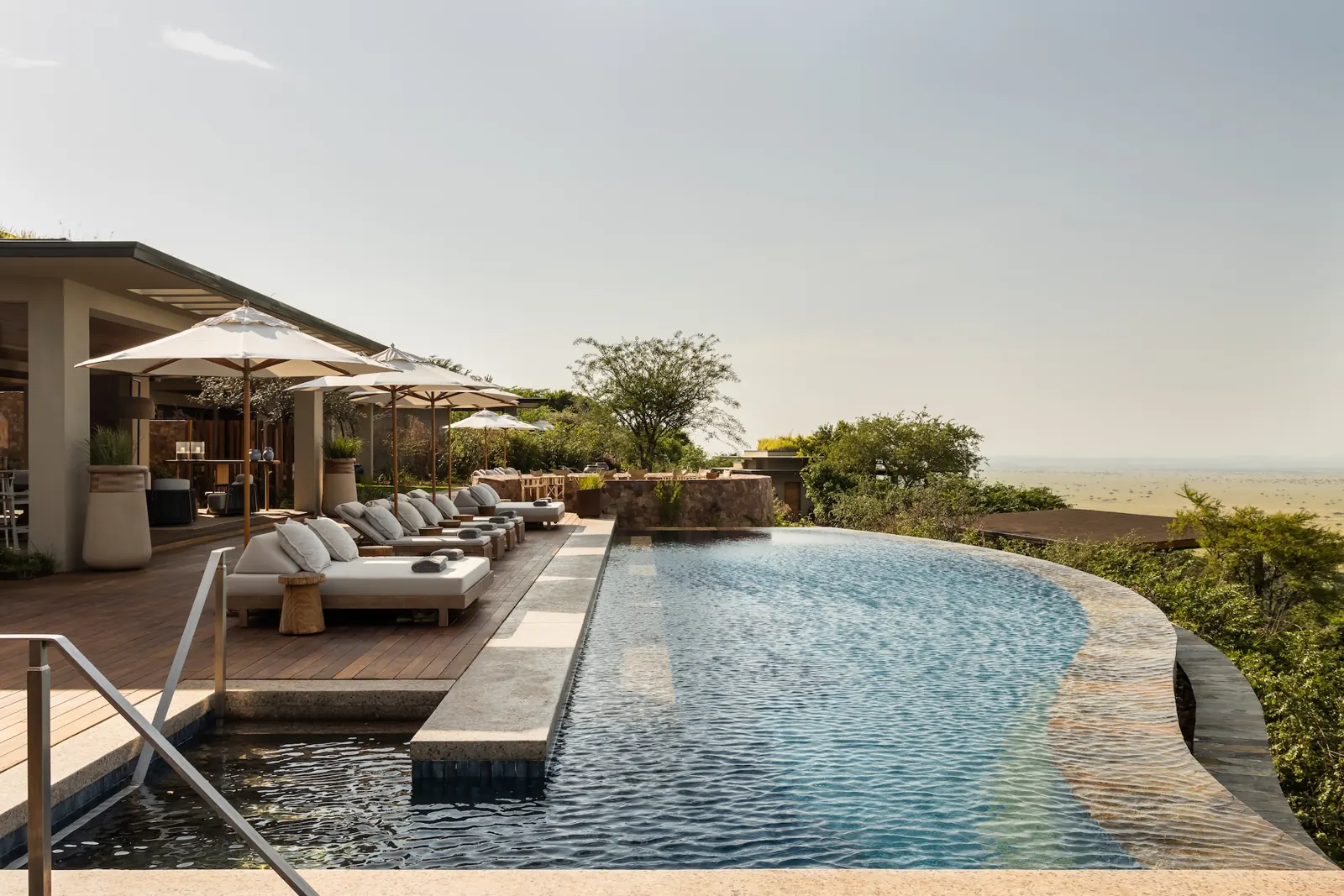
Jao Camp sits on a private island surrounded by channels, floodplains and woodland. Steel, timber and glass create high-ceilinged spaces with views beyond the island. Each of the five suites and two villas has a private plunge pool, sitting and dining areas and indoor and outdoor showers. Back in camp in the afternoon, you can watch the channels from the side of your pool.
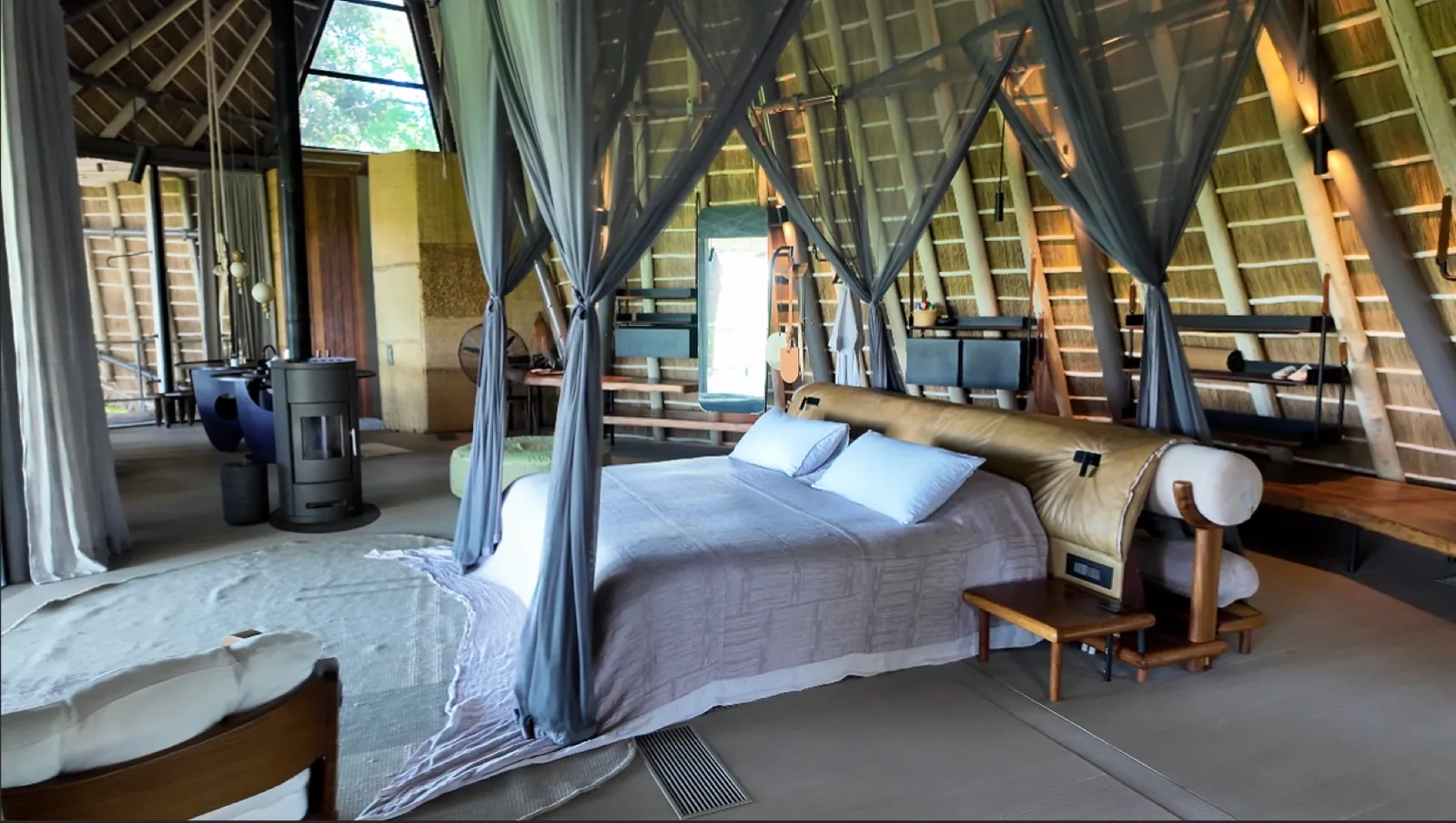
The two villas add a private chef, butler and vehicle, as well as their own living space and fire pit. Shared facilities include a library and exhibition space, wine cellar, gym and pool. Treatments at Jao Spa cost extra. Meals draw on local and international cooking and can be served by the pool or beside the fire.
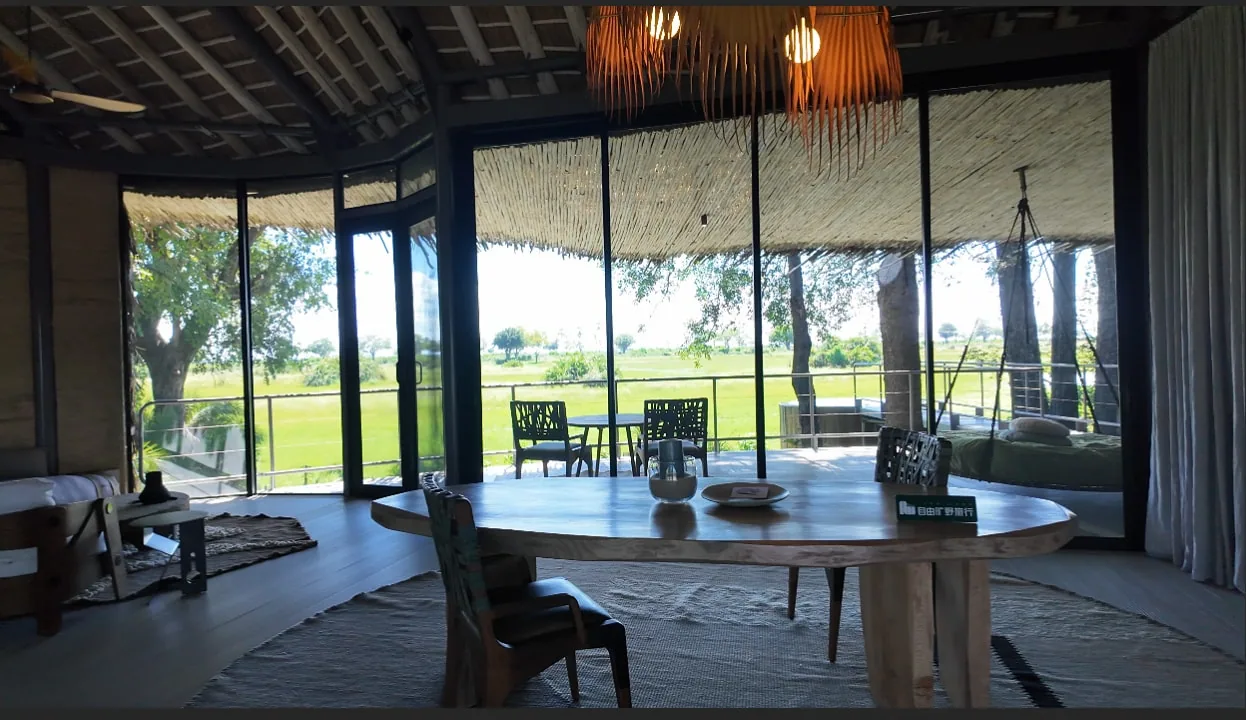
Choose from daytime and night game drives and guided walking safaris. When water allows, take a mokoro dugout canoe or boat into the channels. Seasonal fishing is catch-and-release.
Tubu Tree Camp | Eight tents in the shade on Hunda Island
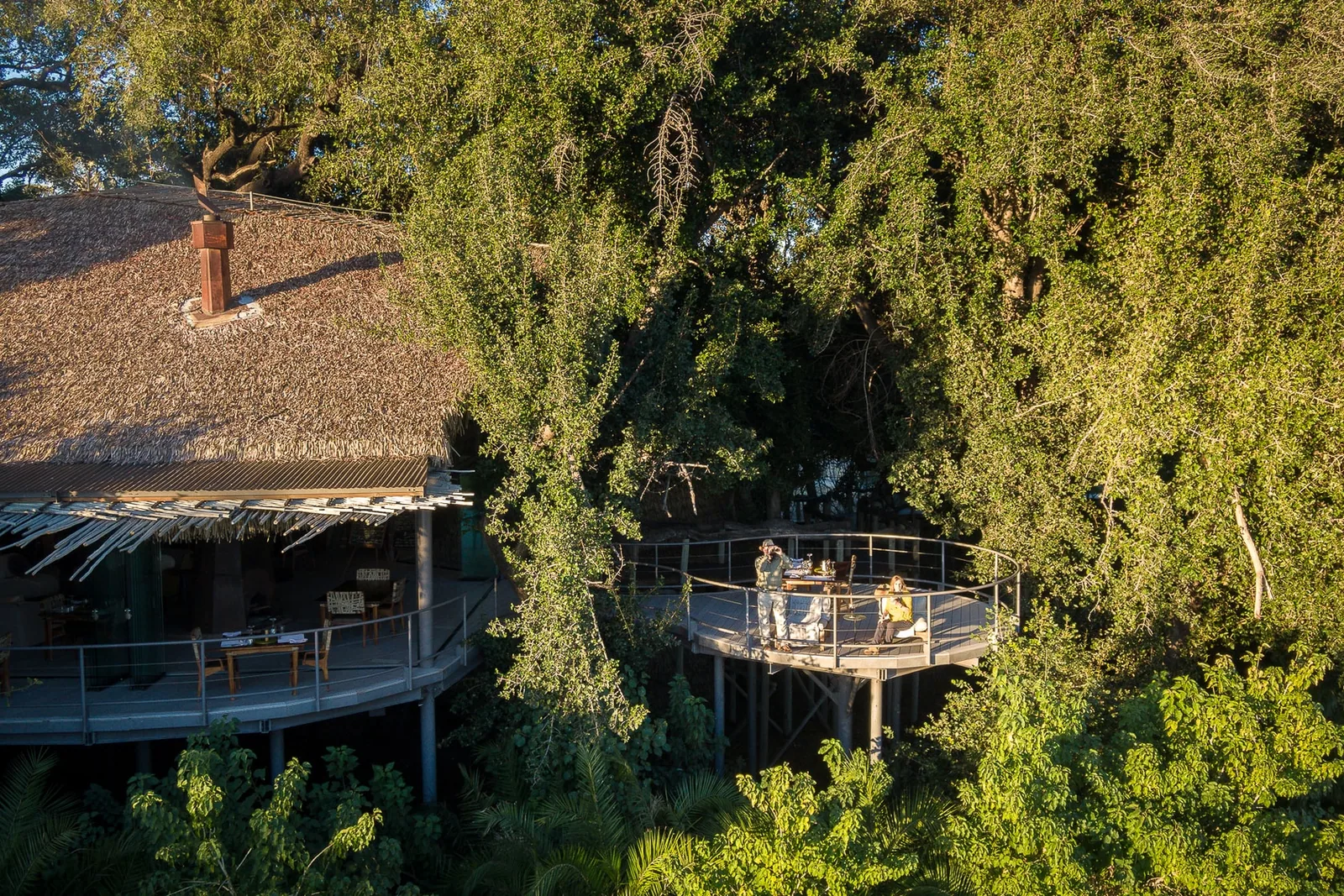
Tubu Tree is on Hunda Island in the west of Jao Reserve. It faces a seasonal floodplain, with mopane woodland, drier sandy ground and riverine forest around it. Eight tents stand on timber platforms. Shaded walkways join them to the thatched common areas. Each has an en-suite bathroom, outdoor shower and private deck looking over the open plains.
The family unit joins two adjacent en-suite tents through a shared sitting area. The main dining and lounge areas are raised among the trees, with a pool deck looking out over the plain below. Go out after an early breakfast, return for brunch and sit by the fire in the evening to talk over the day.
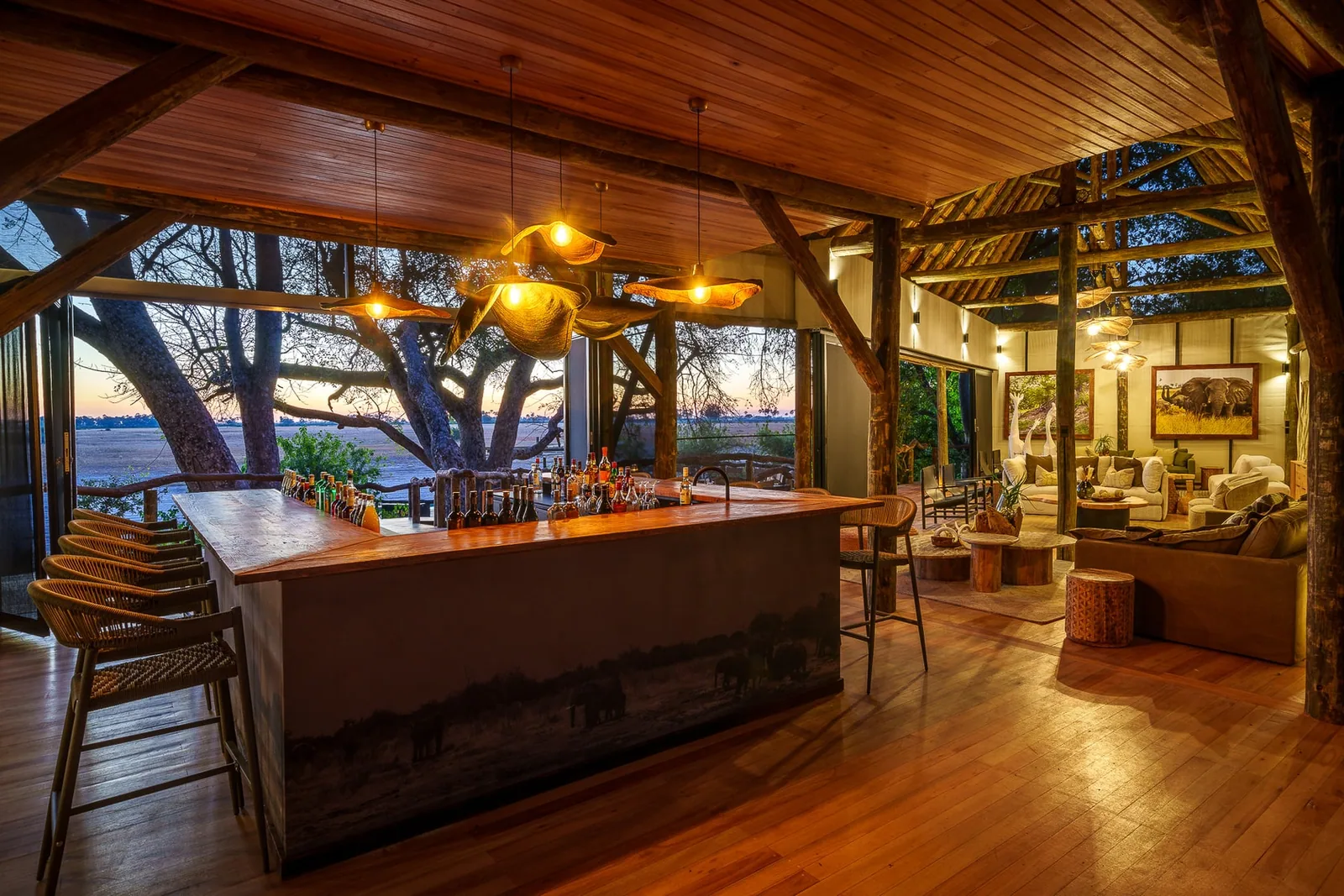
Land activities are Tubu Tree's particular strength. Day and night game drives and walking safaris cover different habitats in search of elephants, lions, leopards and plains game. During the flood season, if water levels permit, boating, mokoro outings and seasonal fishing also feature.
Little Tubu Camp | Three tents in the trees
Little Tubu also sits on Hunda Island. Its three elevated tents shelter beneath fig and jackalberry trees facing a seasonal riverbed. Each has an en-suite bathroom, outdoor shower and private deck. The boardwalk continues to the dining room, bar, lounge and pool deck, where shade and open views go together.
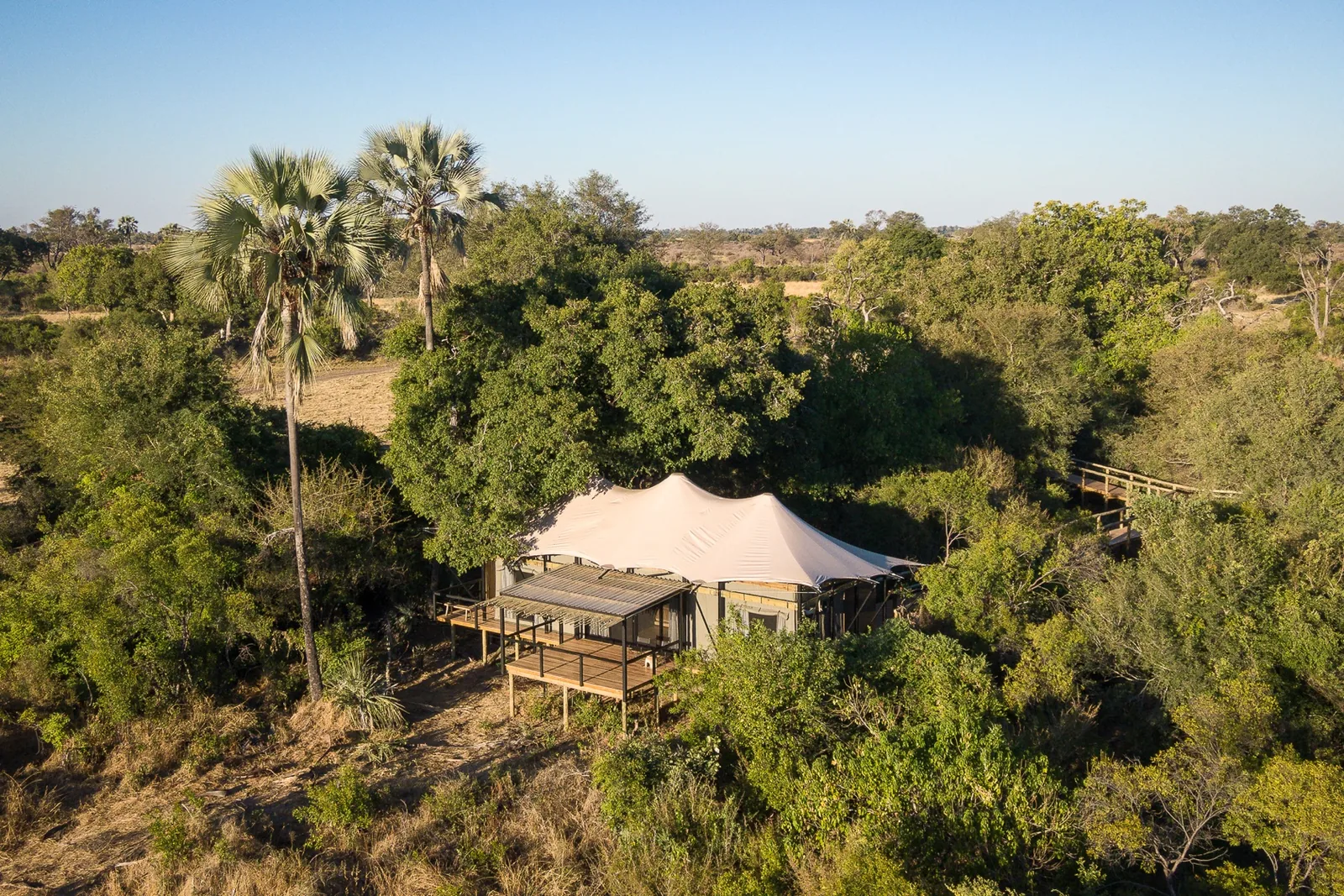
Little Tubu shares Tubu Tree's wildlife-viewing area and has its own common spaces and team. The usual six-guest scale gives breakfast, post-drive conversations in the lounge and evenings at the table the feel of a small camp. Meals are served in the thatched main area or beneath old trees, from early breakfast to dinner by the fire.
Day and night game drives start in Hunda Island's woodland. Guided walking safaris focus on tracks and plants. When the seasonal channels are passable, there are mokoro and boat outings. Back at camp, take in the riverbed and the trees from the private deck.
Pelo Camp | Life on a heart-shaped island
Pelo means heart in Setswana, and the camp stands on a heart-shaped island surrounded by channels, lagoons and floodplains. Five simple canvas tents stand on raised timber platforms, with en-suite bathrooms, outdoor showers and shaded private decks. A shared pool, elevated lookout and outdoor boma give you several places to spend time by the water.
Paddling through the reeds puts birds, water lilies and tiny reed frogs in view. Guided walks on the island explore the landscape and local history. Water activities depend on conditions. As the waters recede, land-based game drives can be arranged.
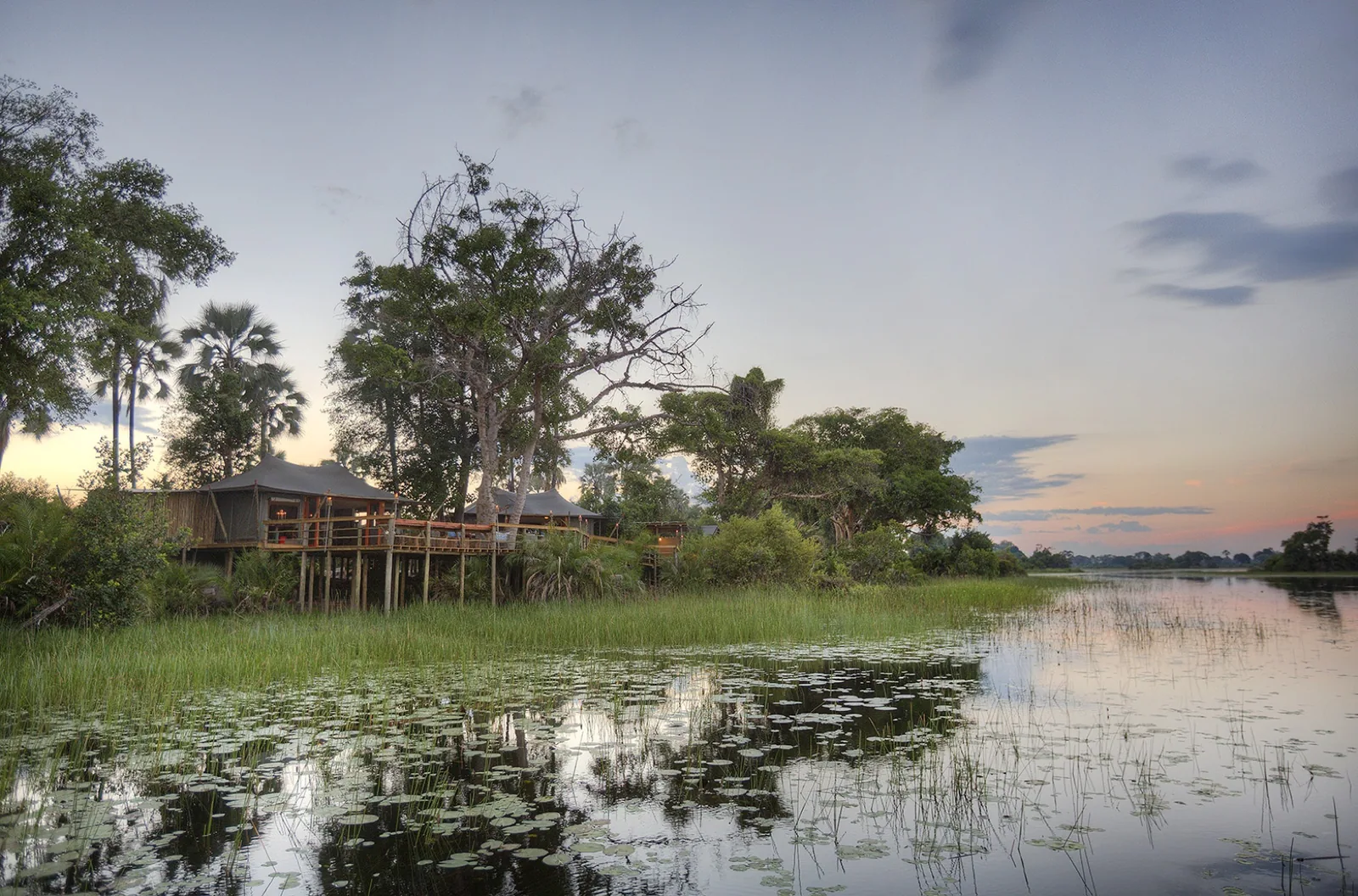
Pelo uses seasonal ingredients and local flavours. Have brunch under a fig tree or dinner by lantern light. An evening at the lookout before dinner is a good way to settle into the island's rhythm.
Jacana Camp | A teardrop island among papyrus channels
Jacana stands on a teardrop-shaped island ringed by palms, papyrus channels and seasonal floodplains. Its five tented suites have en-suite bathrooms, outdoor showers and raised private decks. Metal arches support the sweeping canvas roof of the main area between tall fig trees. Outside are dining, a bar and a lookout, a fire pit on the lower deck and a pool facing the plain.
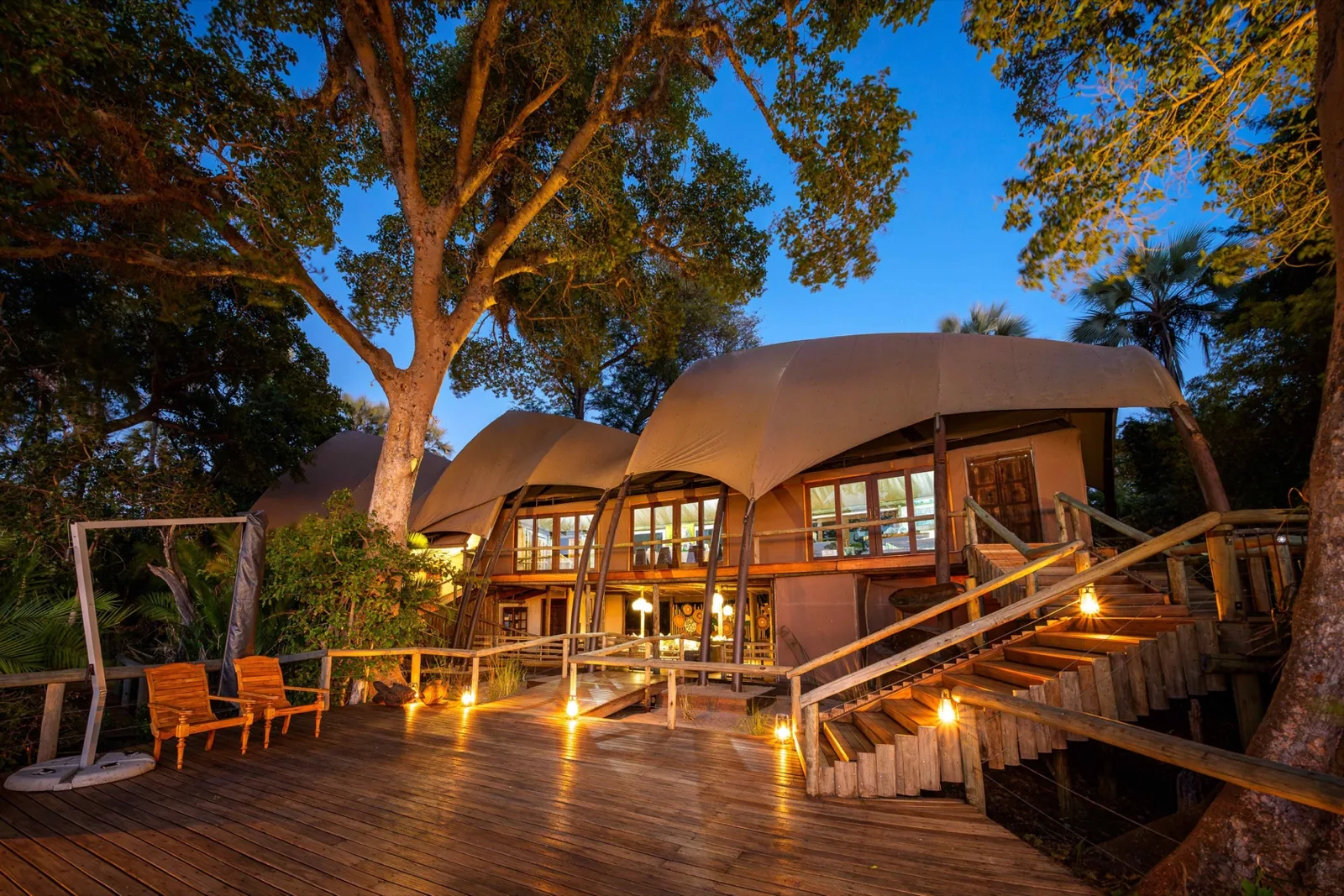
As floodwater spreads across the surrounding plains, the boat ride to camp becomes part of the stay. Mokoro rides, boating, birdwatching and seasonal fishing are the main water-based activities. For land drives, use vehicle departure points on nearby islands. Papyrus beds, open water and shaded islands offer different views on successive outings.
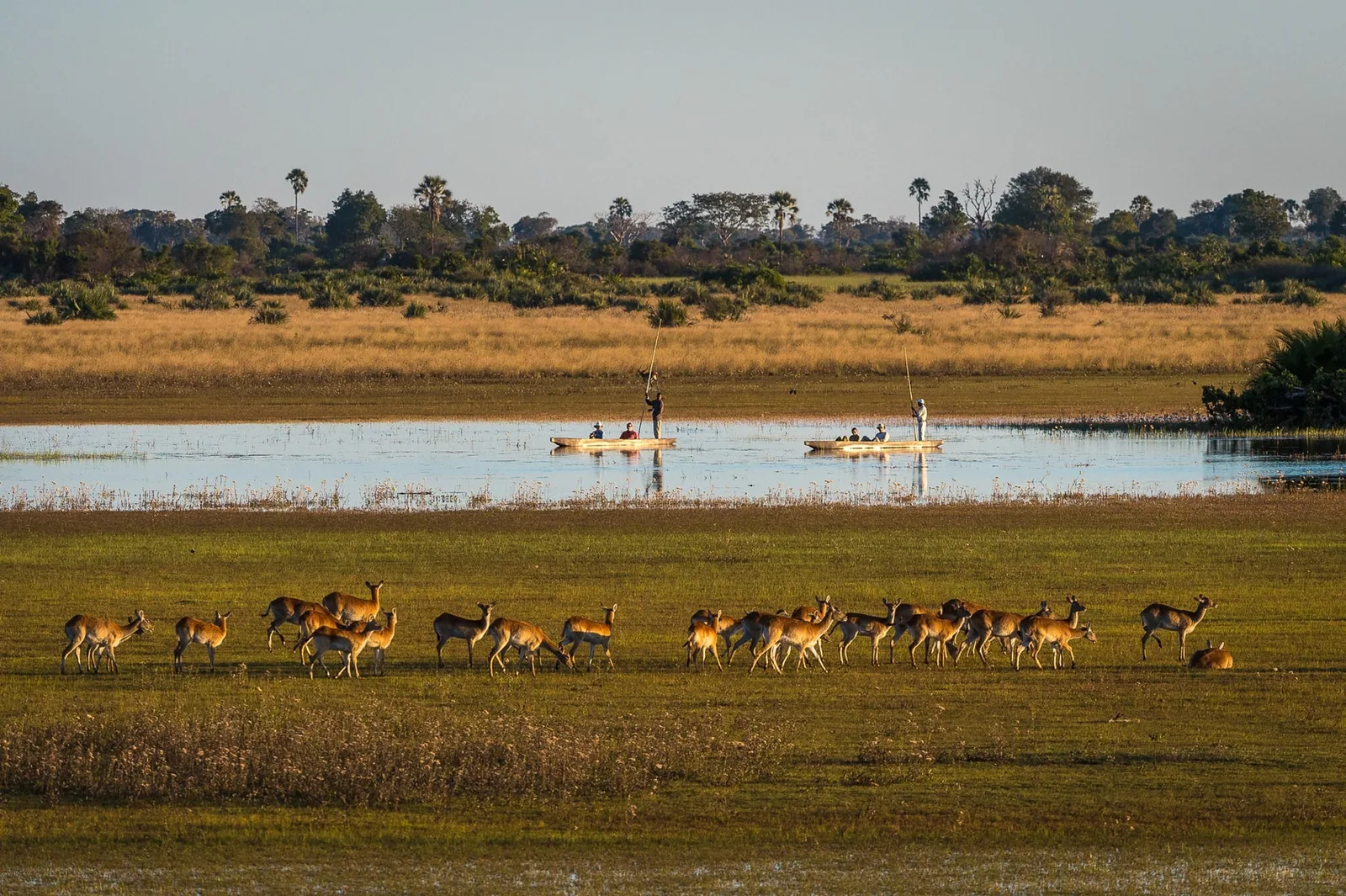
Meals use fresh seasonal ingredients, from a long brunch in the shade to a candlelit dinner. If you enjoy birds and water views, leave time to sit on the suite deck or the platform by the dining room.
Kwetsani Camp | Treehouse accommodation rebuilt in 2026
Kwetsani was first built in 1999 and reopened in June 2026 after a rebuild. The camp retained its raised, treetop setting. There are now five suites and one family suite with two en-suite bedrooms. Timber walkways connect the rooms. Large private decks and floor-to-ceiling glazing face the floodplain.
Cathy and David Kays's daughter Tiffany Riley led the interiors. Sand grey sits alongside orange and indigo drawn from the delta at dawn and dusk. Timber, stone and woven details give the rooms texture. The rebuild added air conditioning and in-room coffee stations, and the camp runs entirely on solar power.
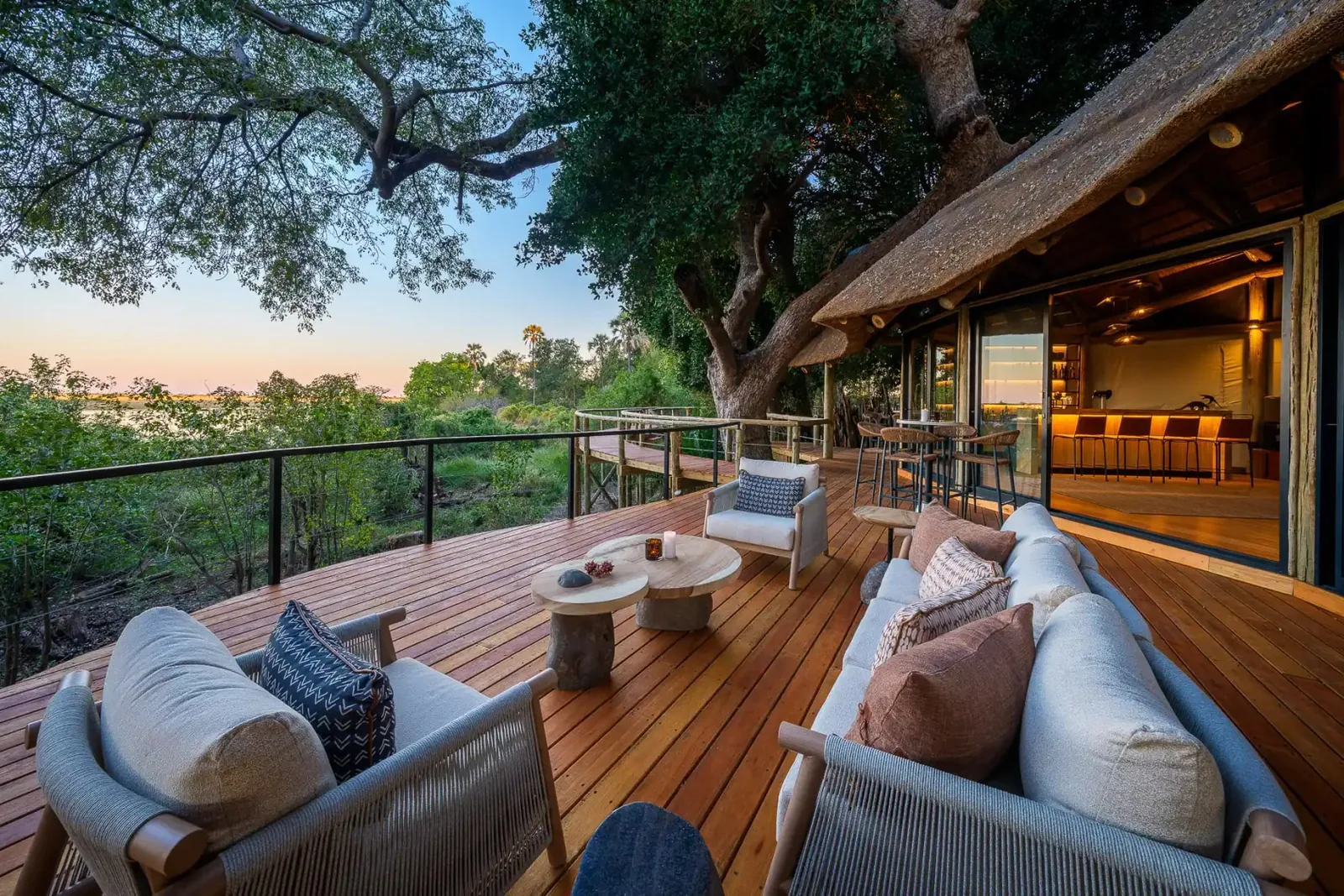
The main lodge has a lounge, bar and dining room, with a new pool deck and outdoor dining area facing the plain. Watch sunrise from the deck and return to your room along the boardwalk after a drive. Land and water outings vary with conditions. At high water, a boat can take you to Hunda Island for a game drive. Mokoro and boat trips follow the seasonal water level.
Cover image · Jao Reserve
Interested in Africa?
Contact our dedicated travel consultant for a free one-on-one consultation and a bespoke African safari itinerary.
Plan My Trip