To see the Great Migration in Africa, is Kenya or Tanzania better, and why? Free Wilderness systematically compares Tanzania's Serengeti and Kenya's Masai Mara across migration routes, safari experience, visitor density, accommodation, budget and suitable travelers, helping first-time East African safari planners make the right choice.
Before answering, we can break it down into four sub-questions:
- What is the Great Migration?
- What is the timing and route of the Great Migration?
- What are the respective advantages of Kenya and Tanzania?
- How do you actually choose between Kenya and Tanzania?
1. What is the East African Great Migration?
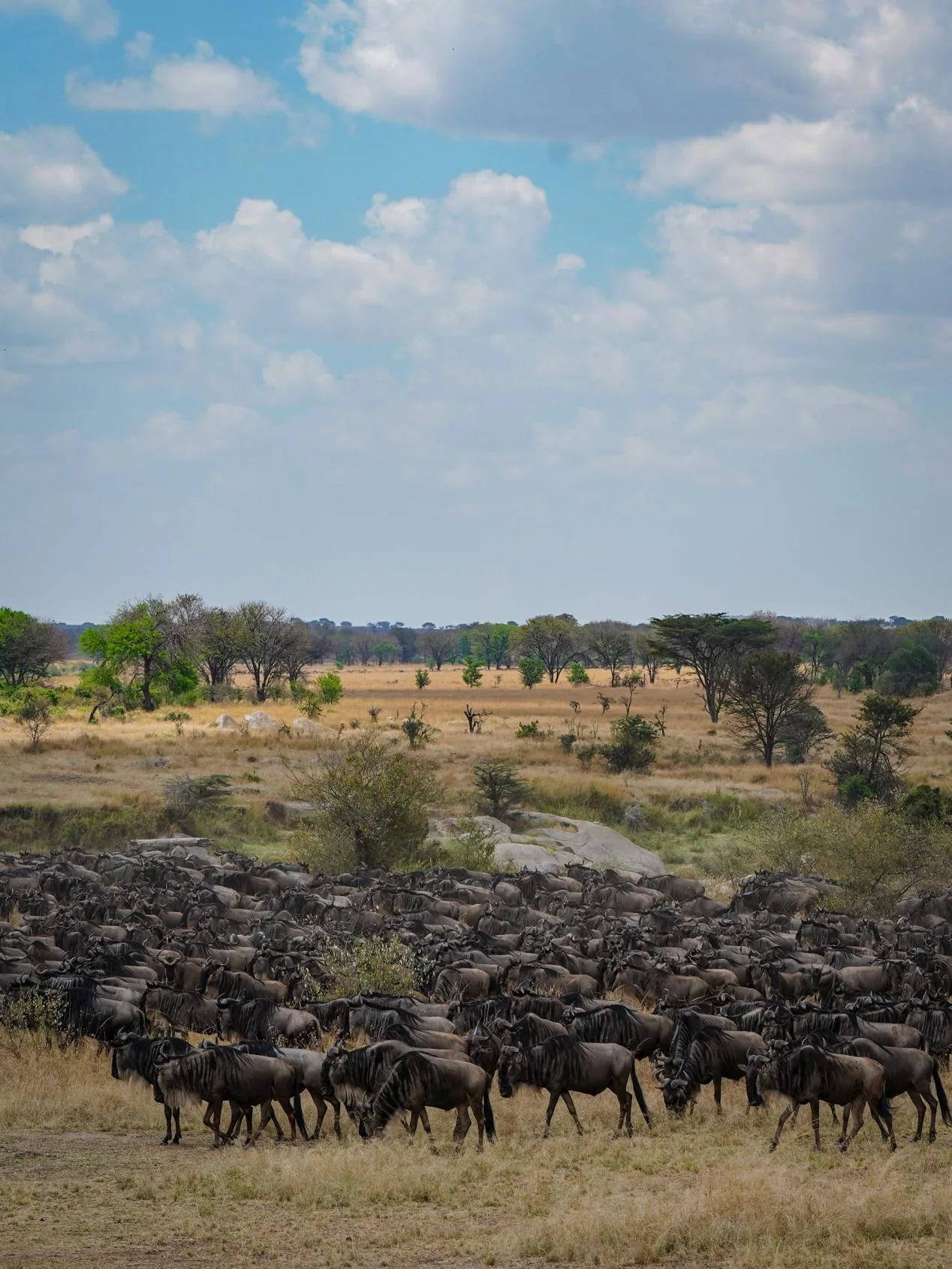
The East African Great Migration is one of the world's largest seasonal land-wildlife migration phenomena. The main participants include:
- Wildebeest
- Zebra
- Thomson's gazelle and other herbivores
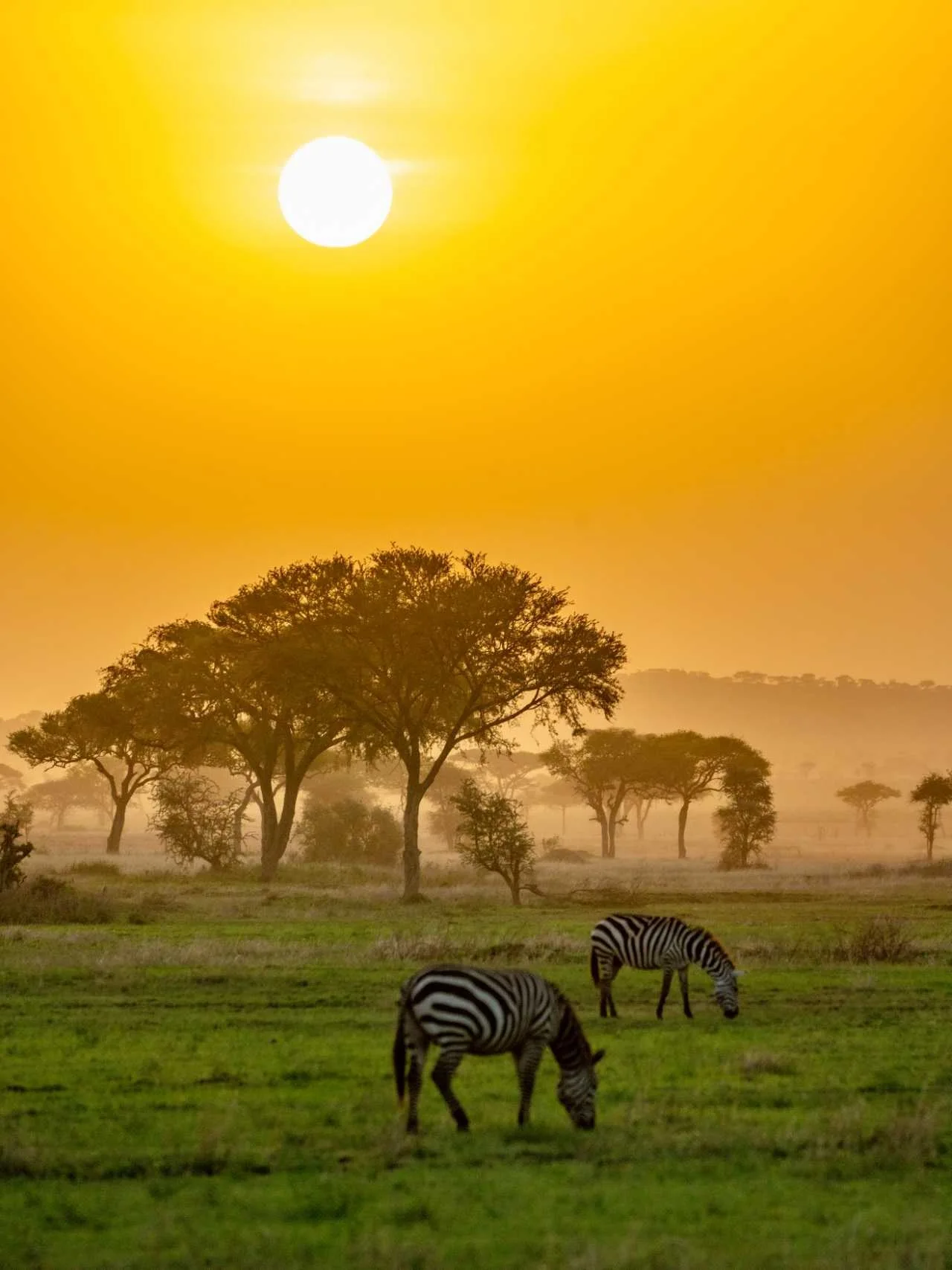
They continuously chase the fresh grazing and water created by rainfall, forming a year-round cycle within the Serengeti–Mara ecosystem. Wildebeest form the main body of the migrating herds.
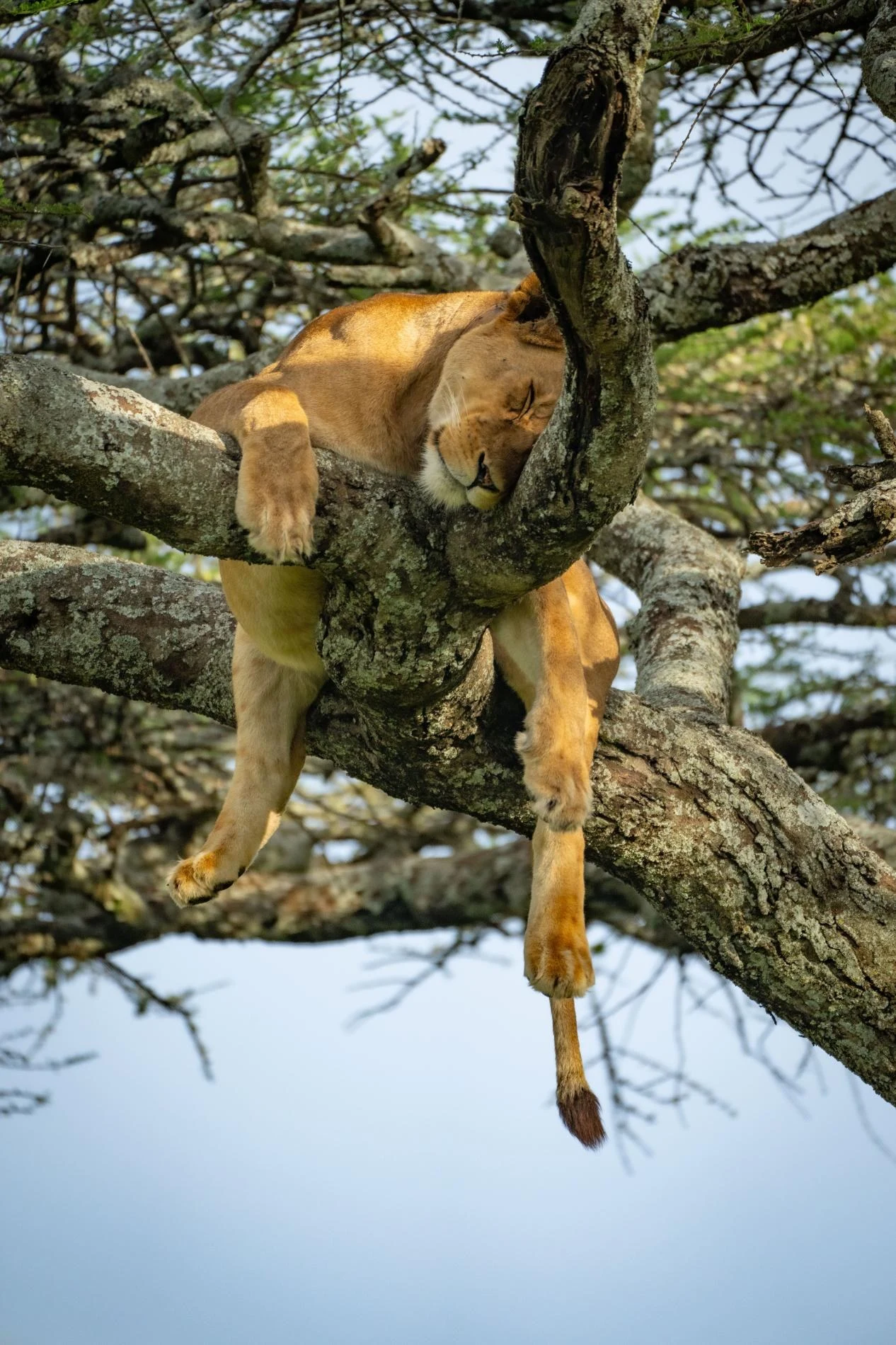
Different herbivores have different feeding habits: zebras can use taller, coarser grass; wildebeest prefer shorter fresh grass; gazelles use lower, more nutritious shoots. So the migration is not "millions of animals moving from point A to point B at once," but a vast, dynamic, dispersed and constantly re-converging natural process. Lions, cheetahs, leopards, spotted hyenas and crocodiles also move around this ecosystem, making the whole migration a key natural window for observing predation, breeding, rearing and survival competition.
2. Timing and route of the Great Migration
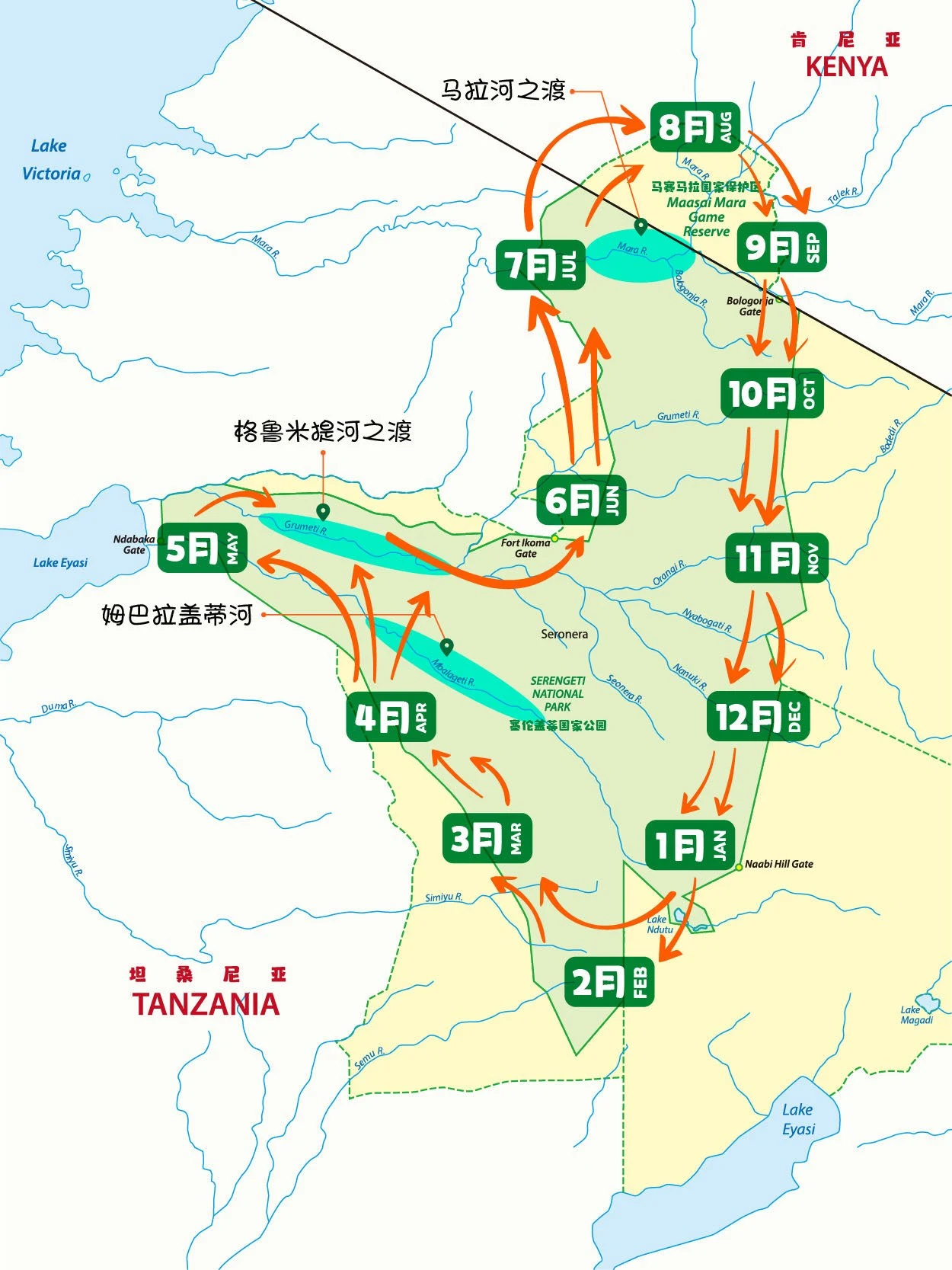
The migration has no fixed "calendar." Animals do not arrive at a location on a set day; actual movement is affected by that year's rainfall, water and grass conditions. But in the long term, it can be divided into several stages:
Jan–Mar: Southern Serengeti and Ndutu calving season
The herds concentrate in southern Serengeti and the Ndutu short-grass plains. This is a very important period: massive wildebeest calving; the grassland is green; lions, cheetahs and hyenas are very active; excellent for observing calves and large cats.
Apr–Jun: Herds gradually move north and northwest
As grazing changes, animals leave the southern plains, pass through central Serengeti and move toward the western corridor. Large wildebeest clusters can be seen pushing north in May–June. In some years river crossings may be seen near the Grumeti River, though different in scale from the Mara crossing.
Jul–Sep: Northern Serengeti and Mara River core season
This is the world's most famous stage. The herds gradually reach northern Serengeti and repeatedly attempt to cross the Mara River — the so-called Mara River crossing / "river of heaven." Some herds cross into Kenya's Masai Mara, but not the entire herd enters Kenya at once.
Sep–Oct: Continued activity in Masai Mara and northern Serengeti
The herds continue to move in Kenya's Masai Mara, northern Tanzania and border ecological areas.
Oct–Dec: Gradually returning south
As new rain arrives, the herds gradually move back to central and southern Serengeti and begin the next cycle. So from a "year-round migration ecology" perspective, Tanzania covers more migration stages; if you only focus on the summer Mara crossing, both Kenya and Tanzania offer opportunities.
3. Advantages of Kenya and Tanzania
Kenya advantages
- The Masai Mara is relatively compact, making it easier to get a high-density experience in a short time.
- The Jul–Sep river crossing is very classic. The Kenyan section of the Mara River is deeper and faster, and crocodile predation is more direct and dramatic.
- Mature private conservancy system. You can't judge Kenyan safari only by the Masai Mara public area. Surrounding private and community conservancies offer stricter vehicle density control, off-road tracking, night safari, walking safari and more private accommodation. High-budget Kenyan safari can be completely different from mass-market Masai Mara trips.
- Kenya's tourism is mature, from mass safari to top luxury camps.
- Lower prices, expected to be over 30% cheaper than Tanzania for the same duration.
Tanzania advantages
- The Great Migration can be seen almost 365 days a year (July-August at the border between the two countries).
- More pristine, purer deep wildlife safari experience.
- More animals and species, with more chances to see all of the Big Five: lion, buffalo, leopard, rhino and elephant. The Serengeti has world-leading species and numbers.
- Fewer visitors, better experience, like safariing the vast savanna alone.
- The Serengeti's roads, communications, hotel service and standards surpass the Masai Mara.
4. How to choose between Kenya and Tanzania
If you want a quick decision, look at these criteria:
Limited time and budget, focused on the Jul–Sep Mara crossing: prioritize Kenya
The Masai Mara is compact — 6–8 days completes a full safari; accommodation ranges widely, making budget easier to control. For a Jul–Sep migration and crossing focus, Kenya is a very mature choice.
Ample time and budget, deep migration experience, big cats and vast savanna: prioritize Tanzania
The Serengeti covers more migration stages, from the Jan–Mar calving season to the Jul–Sep northern crossing, all designable by season. Better suited to 8–10+ day deep safaris, and to photography, luxury and in-depth travelers.
FAQ
QIs the Great Migration year-round?
Yes. The East African Great Migration is a year-round cycle: Jan–Mar calving in southern Serengeti; Apr–Jun moving north; Jul–Sep crossing the Mara; Oct–Dec returning south. Tanzania's Serengeti sees the herds almost year-round, while Kenya's Masai Mara is concentrated from Jul–Oct.
QFor a first African migration trip, Kenya or Tanzania?
If time and budget are limited and you mainly want the Jul–Sep Mara crossing, choose Kenya (6–8 days). If budget is ample and you want deep experience, photography or big cats, choose Tanzania (8–10+ days).
QIs there a big price difference between Kenya and Tanzania?
For the same days and accommodation level, Kenya is expected to be over 30% cheaper. The Masai Mara is compact with lower transport costs; the Serengeti is larger with usually higher internal flight and camp costs.
QWhich is better for the Mara river crossing, Kenya or Tanzania?
Both offer opportunities in Jul–Sep. The Kenyan Mara is deeper and faster with stronger visual impact; northern Serengeti crossings are more pristine with lower visitor density but need more days to cover.
Interested in Africa?
Contact our dedicated travel consultant for a free one-on-one consultation and a bespoke African safari itinerary.
Plan My Trip