If you are travelling to Cape Town or Kruger, add South Africa's customs declaration to your pre-trip checklist alongside your passport, flights and visa documents. Since 1 July 2026, travellers generally need to submit an online declaration before entering or leaving South Africa, including for the return trip. The South African Revenue Service (SARS) confirmed again on 12 November that the official service is free. A submission gets you a customs confirmation, not a visa or an electronic travel authorisation (ETA); those are handled separately under Home Affairs rules.
Who must declare? What about connections and children?
If you are entering or leaving South Africa by air, road, sea or cross-border rail, you generally need to declare. This applies to foreign visitors, South African citizens and residents, and business travellers. If you only have ordinary personal effects, indicate that you have nothing to declare when that is the case. Each traveller, including an infant, needs a separate submission. Parents or legal guardians can file for children. If someone cannot complete the form because of age, health or disability, a caregiver or other person can assist and is responsible for the accuracy of the declaration.
Air and sea transit passengers can be exempt if they remain in a designated transit area or stay aboard the aircraft or ship on which they arrived. If you have an international connection in Johannesburg, ask your airline whether you can complete it airside. If you must clear immigration, collect baggage and check in again, follow the entry procedure.
How does the 24-hour window work, and where do you file?
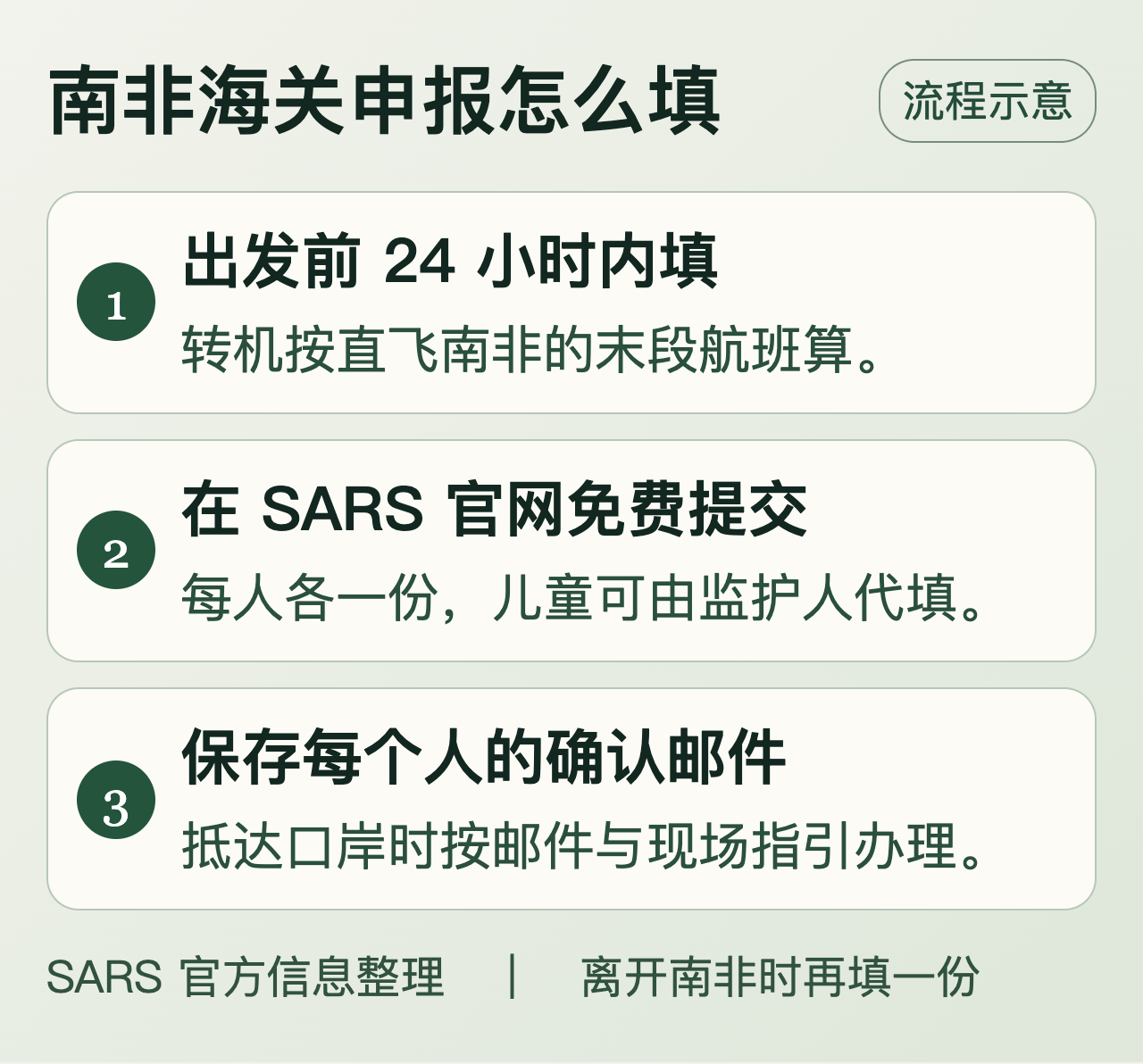
Submit no more than 24 hours before departure. On a connecting itinerary to South Africa, count back from the departure of the last flight that goes directly to South Africa. For example, on a journey via Doha to Cape Town, use the departure time of the Doha–Cape Town flight. When leaving South Africa, submit a fresh declaration based on the departure time of the outbound leg.
On the SARS website, open Traveller Declaration and choose Complete Declaration. You can also use the SATMS app linked in the official guidance or the official QR code at the port. Have your passport, itinerary, flight number or vehicle details, accommodation address, email address and fellow travellers' details ready. If travelling for business, state the actual purpose and provide company or goods information as prompted.
Official SARS declaration portal https://tools.sars.gov.za/sarsonlinequery/traveller
Save each traveller's confirmation email on your phone or print it as a backup. It contains instructions for arrival at the port. Update your declaration before going through customs if your flight, address or the goods you are carrying change after submission.
What needs attention beyond clothes and a phone?
You do not need to list ordinary personal items, such as clothes or a phone, one by one. Declare goods above the duty-free allowance, restricted goods, commercial goods, declarable items carried for others and items requiring temporary import or export procedures. For excess alcohol or potentially restricted animal or plant products such as honey, keep details of what you are carrying, how much and any receipts at hand. Restricted goods may also require permits.
If arriving from outside the Common Monetary Area, declare South African rand banknotes as required by SARS. Under the current SATMS guidance, departing travellers carrying over ZAR 100,000 or the equivalent in local or foreign currency or bearer instruments must obtain the applicable authorisation in advance and declare it. The form may ask for the currency, amount, purpose and source of the funds. The rand banknote limit rose from ZAR 25,000 to ZAR 100,000 in April 2026; the Reserve Bank notice governs its scope.
Goods carried for sale or other business purposes are commercial goods; customs also considers quantity, size and intended use. For exhibition samples or work equipment, have the descriptions, quantities, serial numbers, values and supporting documents ready. Commercial goods may require a formal clearance; temporary imports can also require a deposit and checks on re-export.
How do duty-free allowances and VAT refunds work?
Under rules effective 14 August 2026, qualifying new or used goods for personal use or gifts in accompanied baggage are exempt from duties and VAT up to ZAR 10,000 per person. The allowance is available once in 30 days and not to people returning after being out of South Africa for less than 48 hours. Travellers cannot combine allowances against one item. Alcohol, tobacco and perfume have separate quantity limits. An eligible adult may, for example, bring in two litres of wine plus one litre in total of other alcohol duty free. No alcohol or tobacco allowance applies to travellers under 18.
Declare anything over the applicable allowance. Under the general rules, if eligible additional goods are worth no more than ZAR 40,000, you may opt for a flat 20% customs duty with no VAT on those goods. This option also requires the combined value of excisable goods such as alcohol, general duty-free goods and flat-rate goods not to exceed ZAR 50,000. Outside that scope, customs assesses duty and VAT item by item. Keep your receipt after paying.
Eligible visitors claiming a VAT refund on purchases should include the goods in their outbound declaration and present both the items and the tax invoices to customs. Apply at the VAT Refund Administrator (VRA) counter if there is one. If leaving through a designated port with no VRA counter, obtain customs verification and apply in writing to the VRA. If the goods are in checked baggage, ask where to have them inspected before dropping your bag.
Didn't file online? Where do you go at the port?
At an airport, you normally clear immigration and collect your bags before following the confirmation email and signs to customs. Use the red channel or customs desk if you have goods to declare or are unsure. On departure, follow the email and port instructions for checks on goods, discharging temporary import paperwork or claiming a refund.
If internet access, a system failure or another reasonable issue prevented an electronic submission, ask a customs officer for help at a port providing the service or use a self-service kiosk. If eligible to file on paper, complete TD-01 as directed and add TGD1 when required for declarable goods. SARS says it will not refuse entry or exit solely because a person did not file before reaching the port. Failing to declare goods or making a false declaration is treated separately under customs rules and can lead to delays, detention or seizure of goods, or penalties. For help with the form, contact travellerescalations@sars.gov.za.
What else applies to driving or taking a cross-border train?
If driving a foreign-registered vehicle across the border, you generally need to declare it in the system. For a rental, bring the rental contract and documentation permitting cross-border use. A vehicle covered by a valid carnet is still subject to manual customs checks, but SARS says you need not enter the same vehicle in the platform again. The driver still needs a personal traveller declaration and must declare any goods not covered by the carnet. The ATA Carnet is generally for goods such as professional equipment temporarily imported; a CPD Carnet typically applies to private vehicles. Present the originals at customs.
On cross-border rail, file before reaching the first station in South Africa on entry or the last station in South Africa on exit. If you could not submit online, follow customs instructions at that station. If using an immigration-designated crossing where there is no permanent customs staff, apply through SATMS beforehand and identify the nearest designated customs port. Wait for SARS approval before using that crossing; if it is not approved, use the designated port as directed.
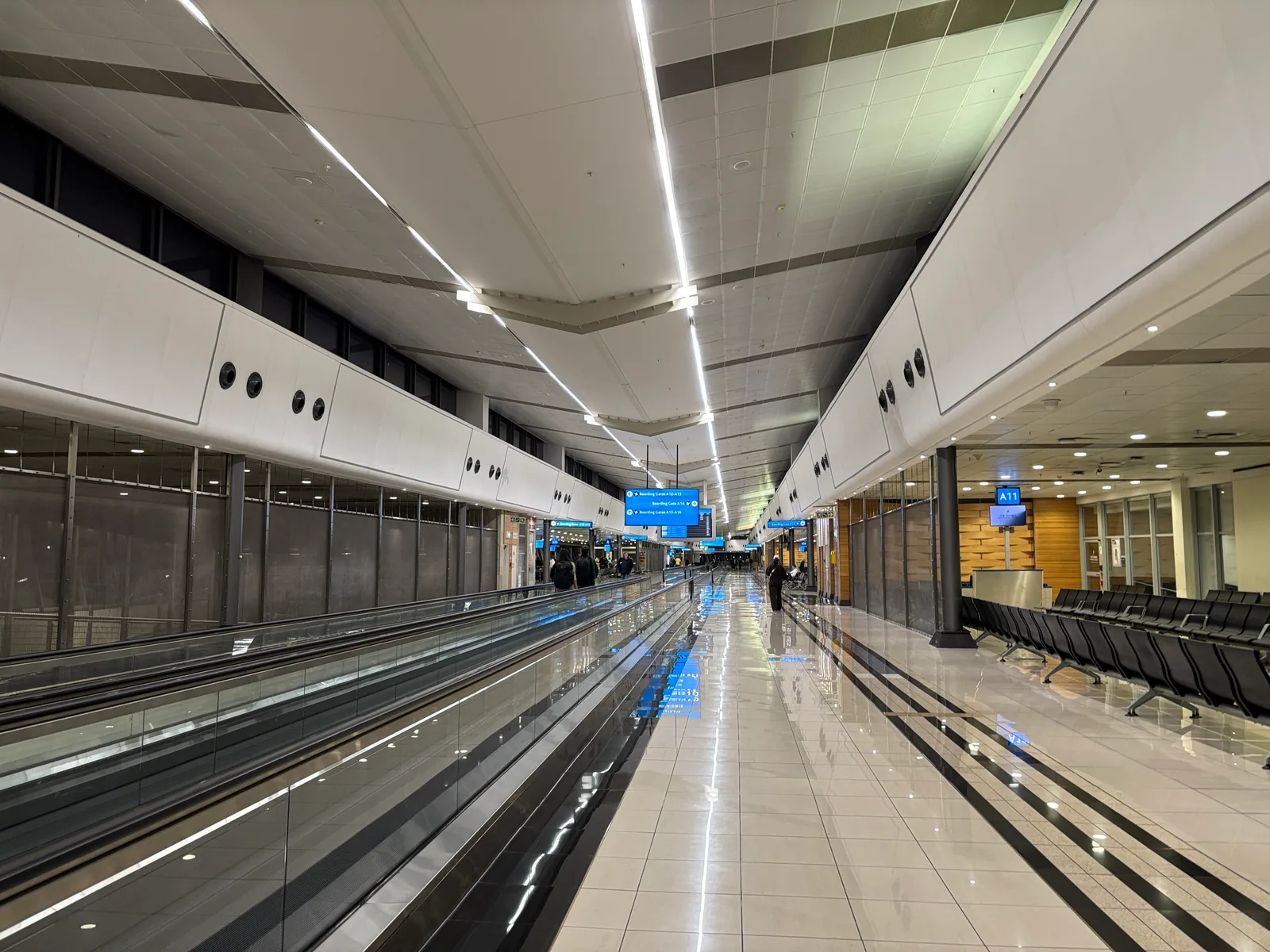
Cover image · Skatebiker / Wikimedia Commons · CC BY-SA 4.0
Interested in Africa?
Contact our dedicated travel consultant for a free one-on-one consultation and a bespoke African safari itinerary.
Plan My Trip