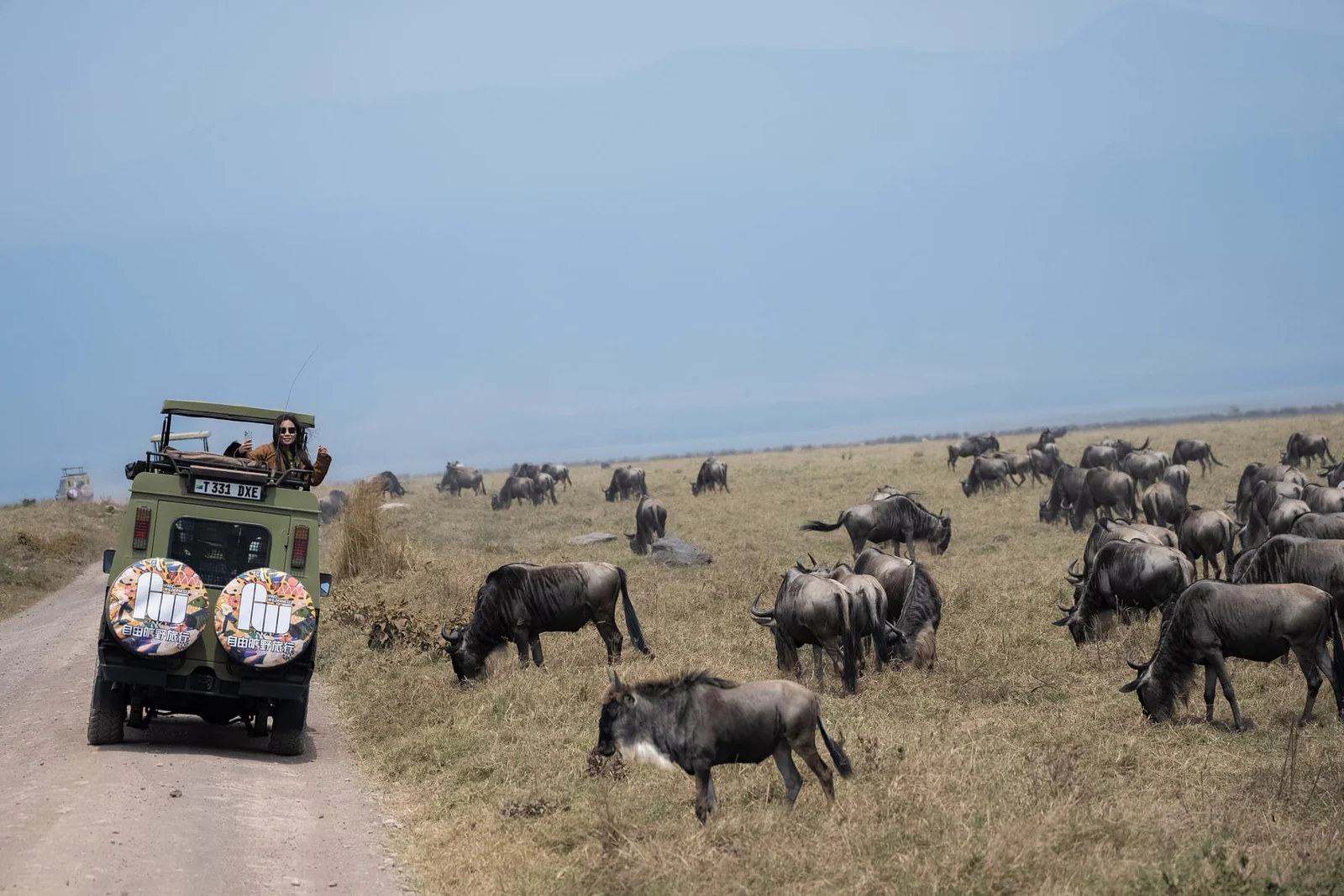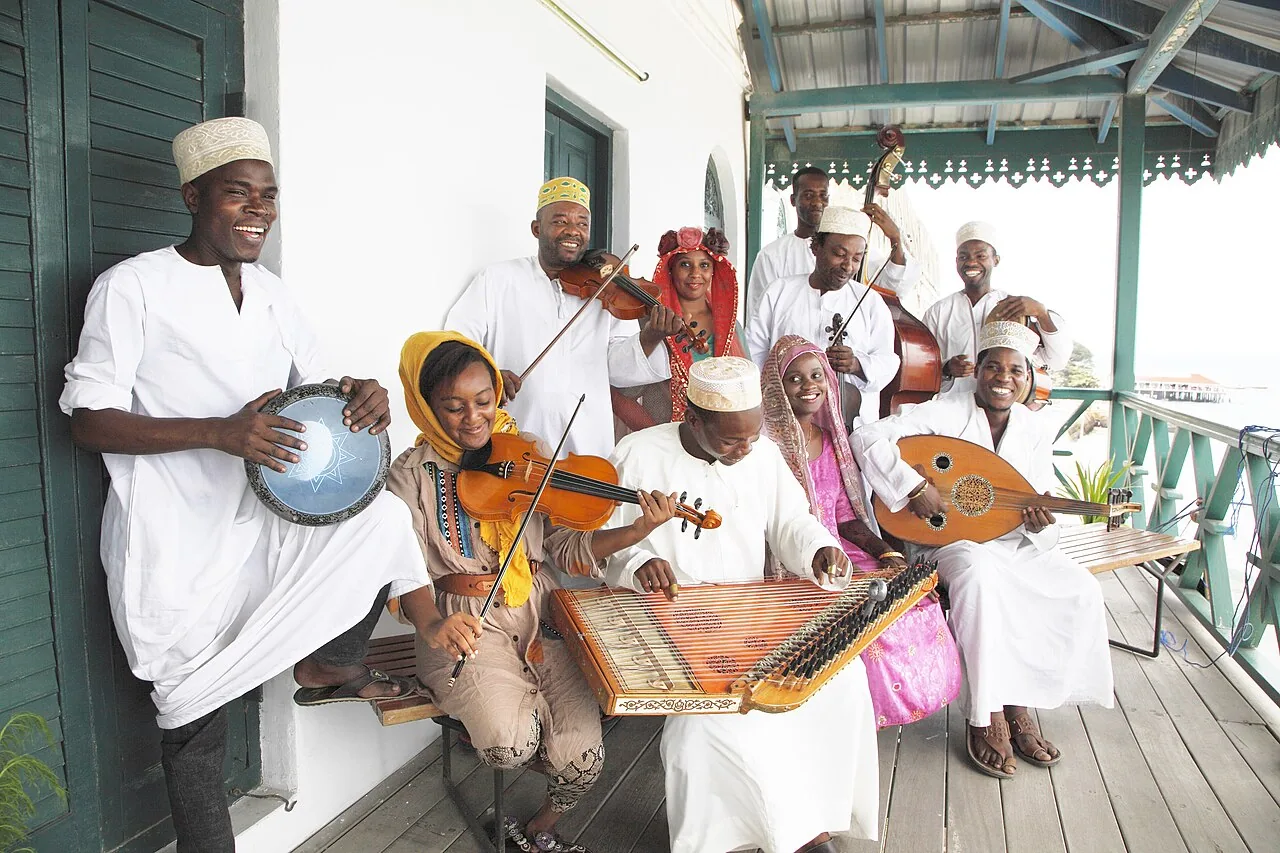
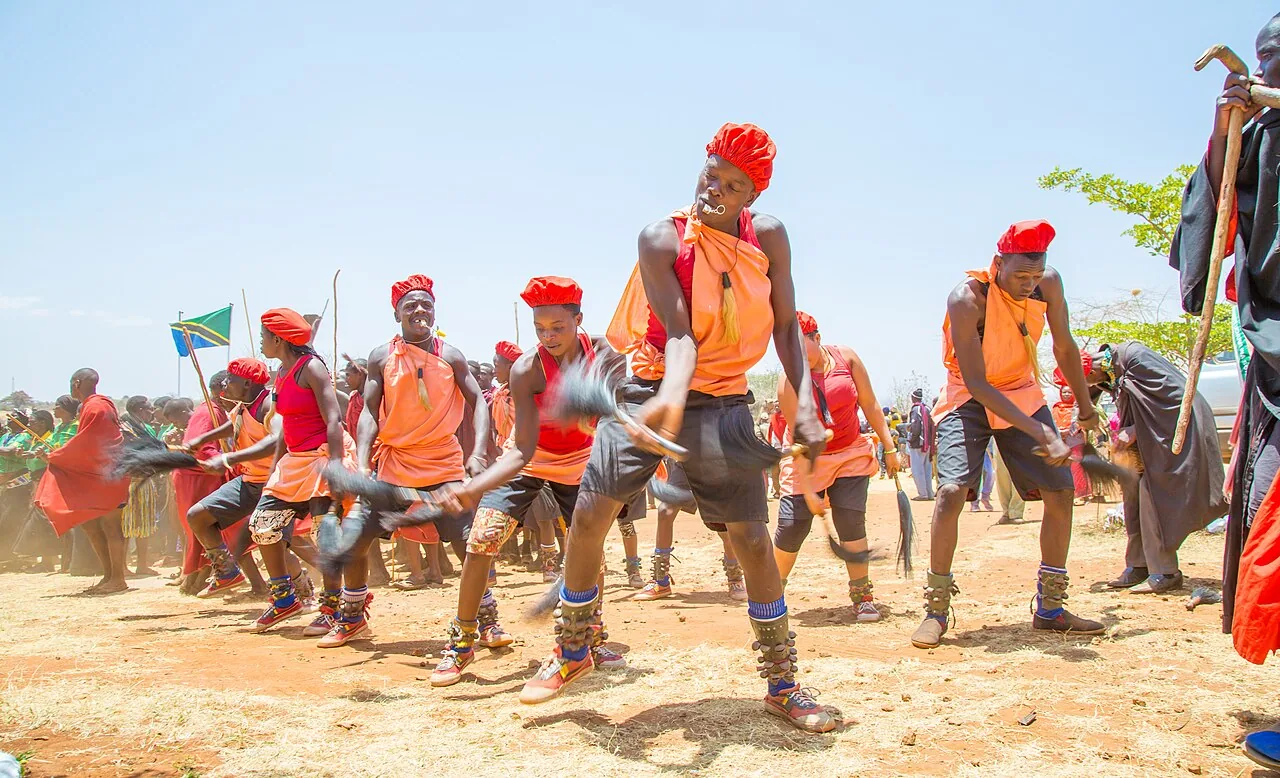
In Tanga, dancers stamp their feet and draw invisible bows. Around Lake Victoria, Sukuma dancers perform with hoes. On a stage in Zanzibar’s Stone Town, bright notes ring from a qanun as a singer recounts an old story in Swahili. In Dar es Salaam, young performers use the same language for rap. Make some time beyond safari and the beach, and you can hear how these sounds belong to different places.
Drumming traditions in Tanga, Pemba and on Lake Victoria
In Tanzania, ngoma can mean a drum or a performance that brings drumming, singing and dance together. Weddings, coming-of-age ceremonies and communal work have all provided occasions for local music and dance. The objects dancers carry and the rhythms they dance to can tell you where a performance comes from.
Ukala is a hunting dance of the coastal Zigua people around Tanga. Dancers stamp out a rhythm and mime drawing a bow and releasing an arrow. Researchers in Bagamoyo have observed versions by several groups, with different steps and formations in the same passage. If you catch a public performance, look for the bow-drawing movement and watch how it leads into the next beat.
Msewe, from Pemba Island, appears in the Chake Chake local government’s cultural materials. While you listen to the drums, watch the performers’ feet: rattles tied to their legs add a second rhythm each time they lift a foot.
Sukuma communities live from Mwanza on Lake Victoria’s southern shore down towards Shinyanga. Their Bugobogobo dance grew from a tradition of collective farming. Dancers spin hoes once used to till soil, and some groups toss and catch them. To learn more, visit the Sukuma Museum at the Bujora Cultural Centre in Kisesa near Mwanza. If you hope to see a specific dance, ask the museum about public performances before traveling.
Stone Town’s taarab: from palace ensembles to weddings and records
Listen for two instruments when you first hear taarab: the qanun, laid flat and plucked for bright notes, and the oud, cradled as it is played for a warmer sound. Zanzibar’s early court ensembles drew heavily on Egyptian bands. Across the Swahili Coast, taarab also reflects sounds from India, the Arabian Gulf and local song and dance.
In the 1920s and 1930s, Zanzibari singer Siti binti Saad sang taarab in Swahili and recorded it with her ensemble. Her songs dealt with familiar situations, sometimes hiding a point in a metaphor and letting listeners work it out. She also sang at weddings along the East African coast. To hear a Zanzibari ensemble today, look to Stone Town’s music academy, where taarab is still taught.
“Malaika,” a song that traveled from East Africa to the world
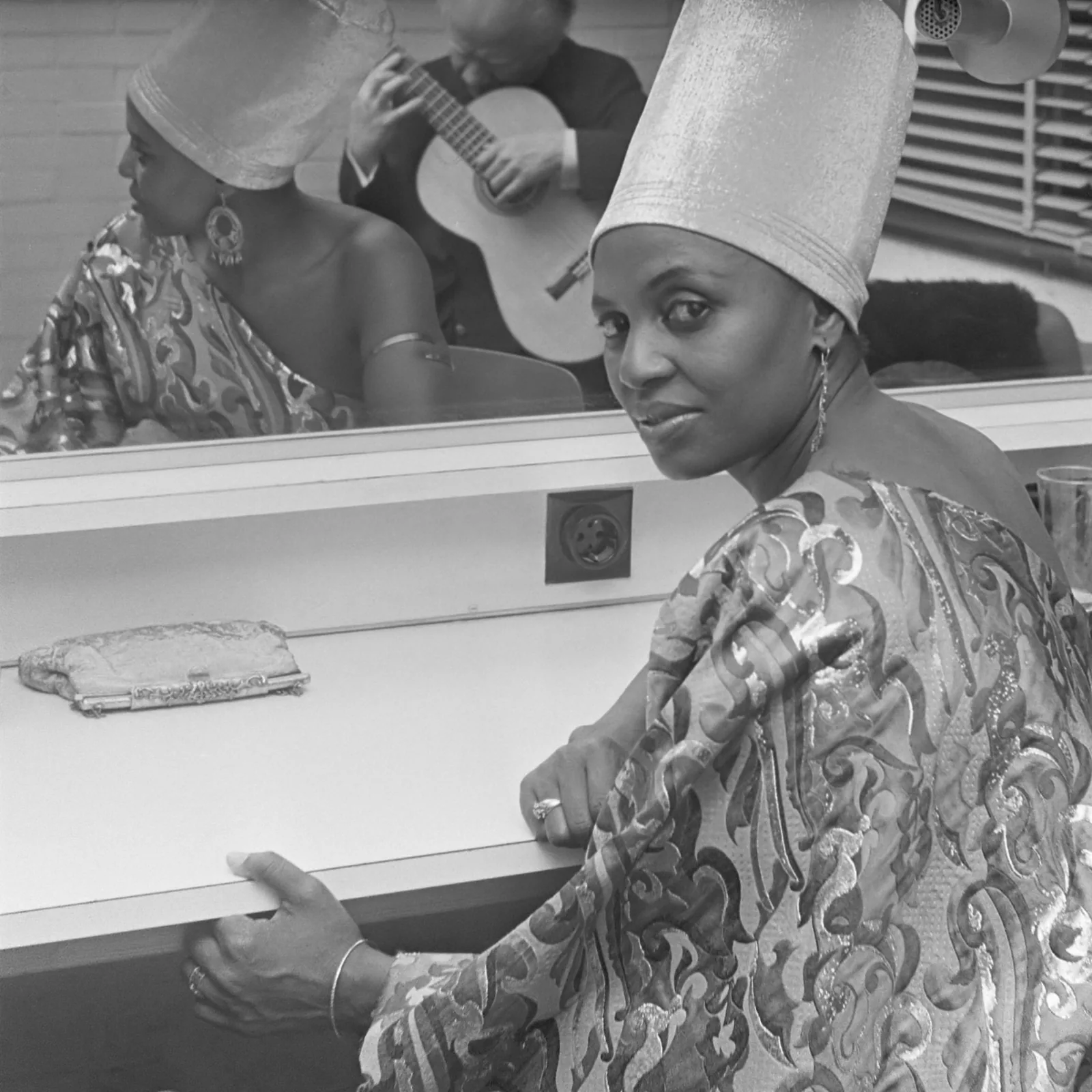
Malaika means “angel” in Swahili. The song is about wanting to marry but not having enough money. Kenyan singer Fadhili William made an early recording that circulated widely. Miriam Makeba and Harry Belafonte included it as “My Angel (Malaika)” on their 1965 album An Evening with Belafonte/Makeba. Listen to both: the early version gives you an East African band’s playing and singing, while the later album offers another arrangement of the same melody.
Swahili rap in Dar es Salaam and new arrangements for Zanzibar taarab
Hip-hop from abroad reached Tanzania in the 1980s. In the 1990s, young artists in Dar es Salaam increasingly wrote in Swahili about work, street life and how outsiders saw them. As records and radio spread the music, Bongo Flava grew into a broad style. Some tracks centre on rap; others sound closer to R&B or dance-floor pop. The local language runs through them all.
Around the same time, Zanzibar’s taarab went electric. Rusha Roho often uses electronic keyboards, drum kits and guitars. In a modern taarab style often called mipasho, singers put arguments, gossip and personal disputes plainly into song. Set it alongside the older recordings to hear two things change: the backing and just how directly the singer speaks.

For a live performance, spend a night in Stone Town
Start with Zanzibar’s Sauti za Busara music festival. Its 24th edition was scheduled for 19–21 March 2027 in Stone Town. Usually held in February, it moved to March to avoid Ramadan. The Old Fort hosted many editions; restoration shifted the 2026 festival to Mnazi Mmoja Grounds, so check the venue for the edition you are booking. The Rahat Zamaan Taarab Orchestra, a Zanzibar ensemble on the 2027 programme, is one to look for if you want to hear the qanun live.
The festival also invites musicians from elsewhere in Africa. Alongside individual performances, organisers and the local music academy have run Swahili Encounters, bringing artists from different places together to rehearse and rearrange music. The 2026 participants included musicians from Kenya, Rwanda, Comoros and Tanzania. Wait for the relevant programme before choosing a day for collaborative performances.
Outside festival dates, check the Dhow Countries Music Academy (DCMA) on Stone Town’s Vuga Road. It teaches taarab and traditional Zanzibari instruments and has ensembles of students and instructors. Ask about public performances before departure. If you only have a few island days after safari, spend the performance night in Stone Town and go to the beach the following day. It is much nicer to hear a whole set than to arrive at the end after rushing over from dinner.
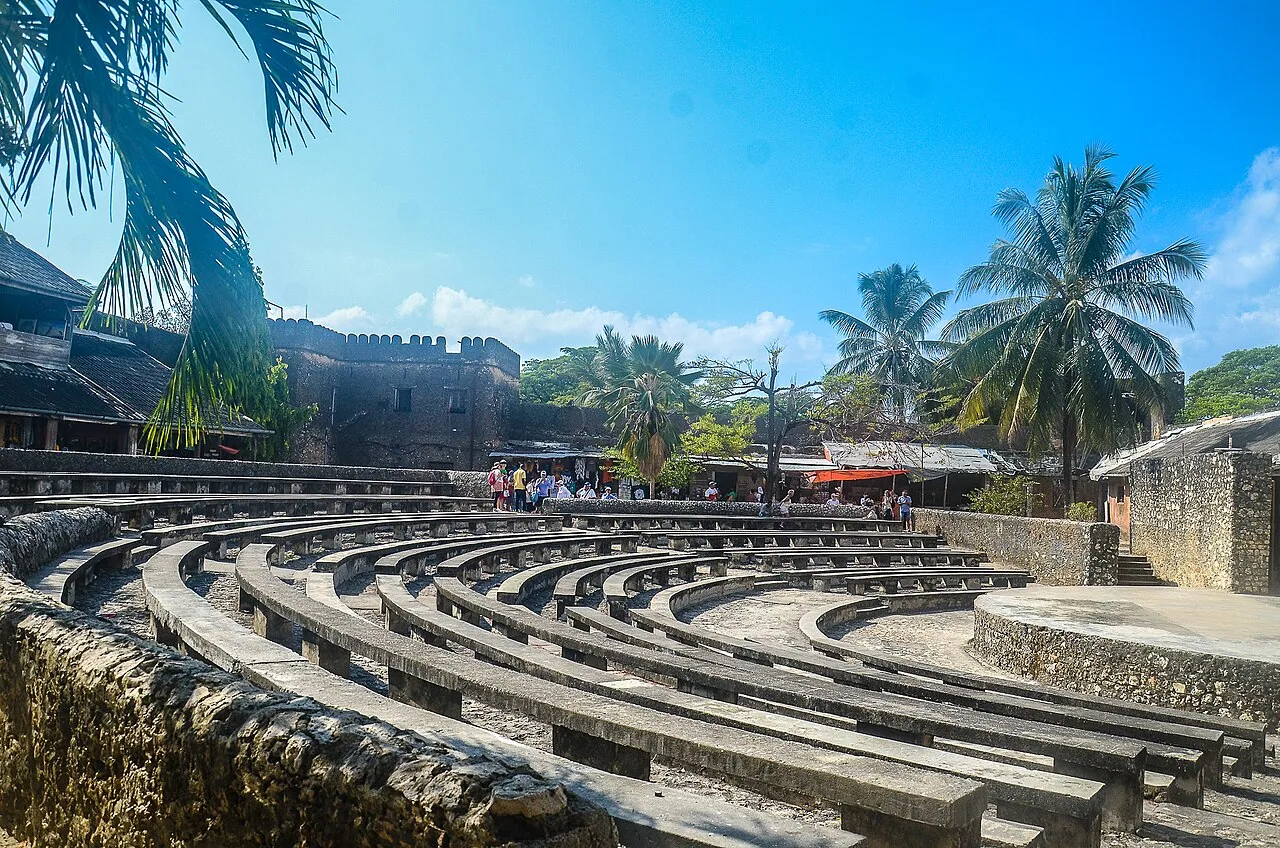
Cover image · Nicholas Calvin · CC BY-SA 4.0
Interested in Africa?
Contact our dedicated travel consultant for a free one-on-one consultation and a bespoke African safari itinerary.
Plan My Trip