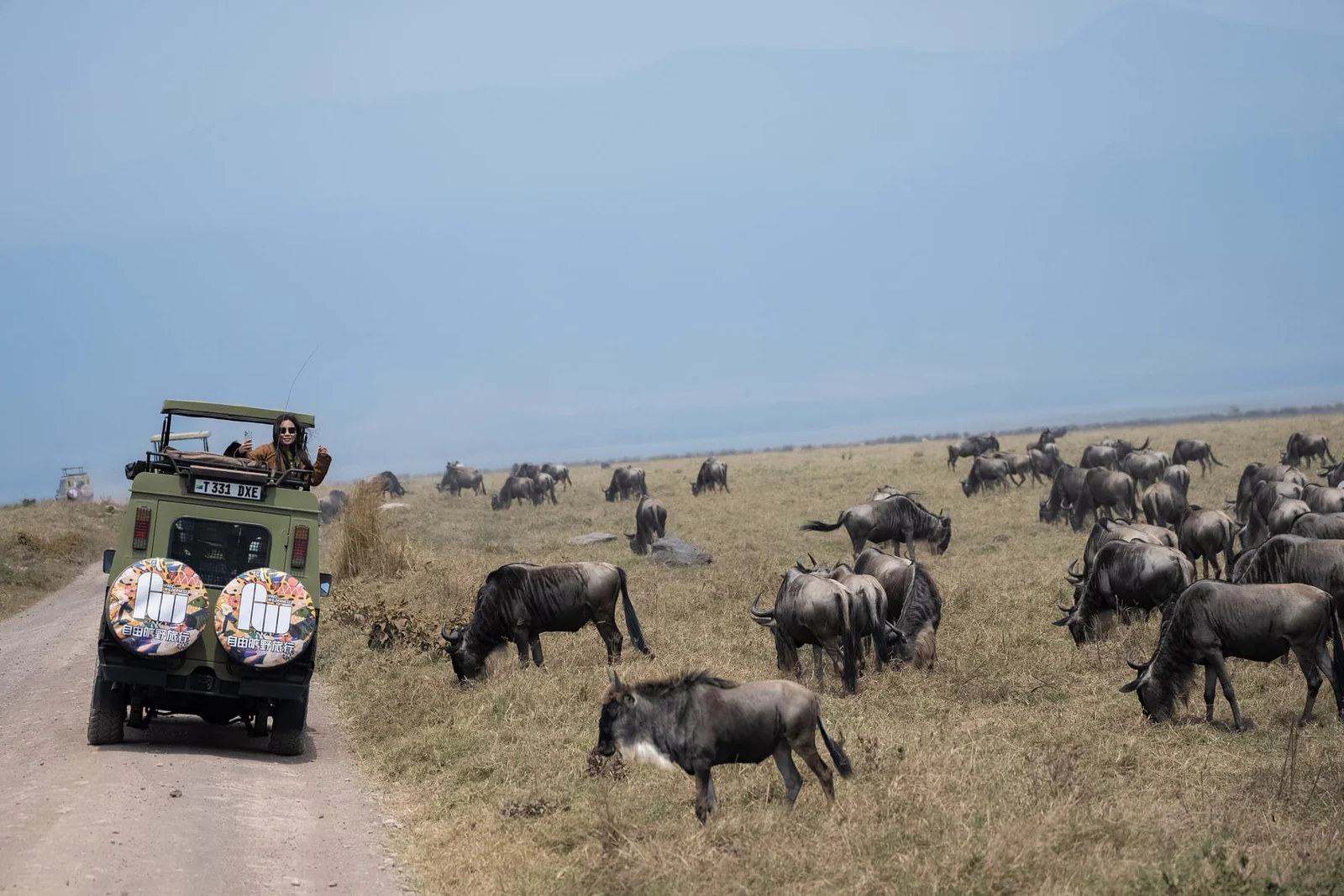
Chinese New Year 2027 falls on 6 February. That date sits inside the wildebeest calving season listed by Tanzania National Parks. If the herd and the calves are the point of the trip, put Ndutu and the short-grass plains of the southern Serengeti at the centre of the safari first, then build the transfers around it. Which patch of grass the herds are on is decided by your guide on the day, based on road conditions and animal movement.Hong Kong Observatory lunar calendar · Serengeti seasonal notes · Ngorongoro official guide
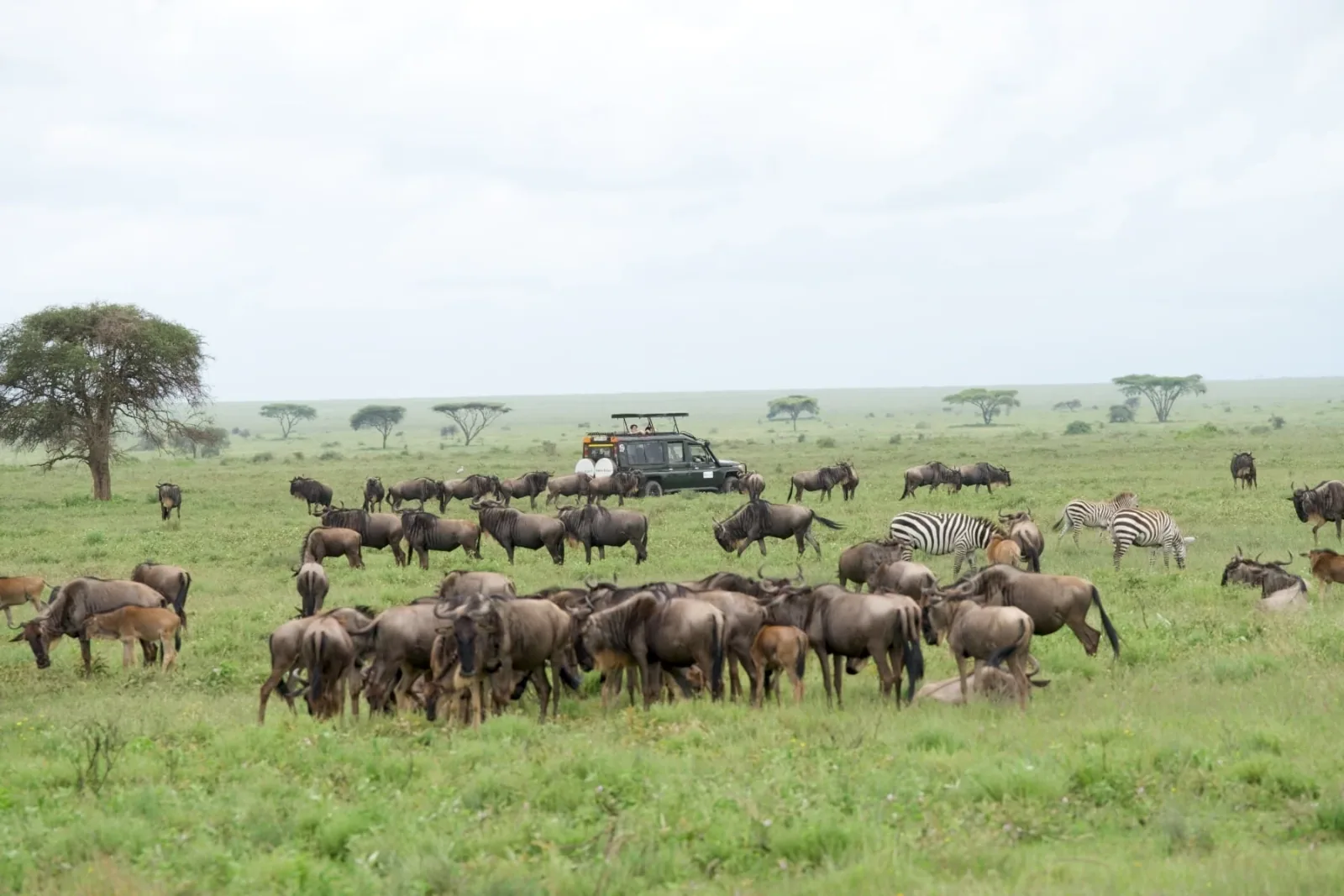
Wildebeest and zebra on the Ndutu plains. Photographed on a Free Wilderness field inspection.
1. Two nights or three at Ndutu?
Start by circling the full safari days on the itinerary. Arrive in the afternoon and leave on the morning of day three, and two nights give you exactly one full day in between. Travelers with tight leave, who also want the Ngorongoro Crater, can plan around that single day.
If the migration is the main reason for the trip, or a family wants to come back to camp at midday and a photographer wants one more early departure, choose three nights at the same camp. That gives two full days, which can flex: if you find the herds on day one, you still have a second morning to return, or to try a different patch of plains.
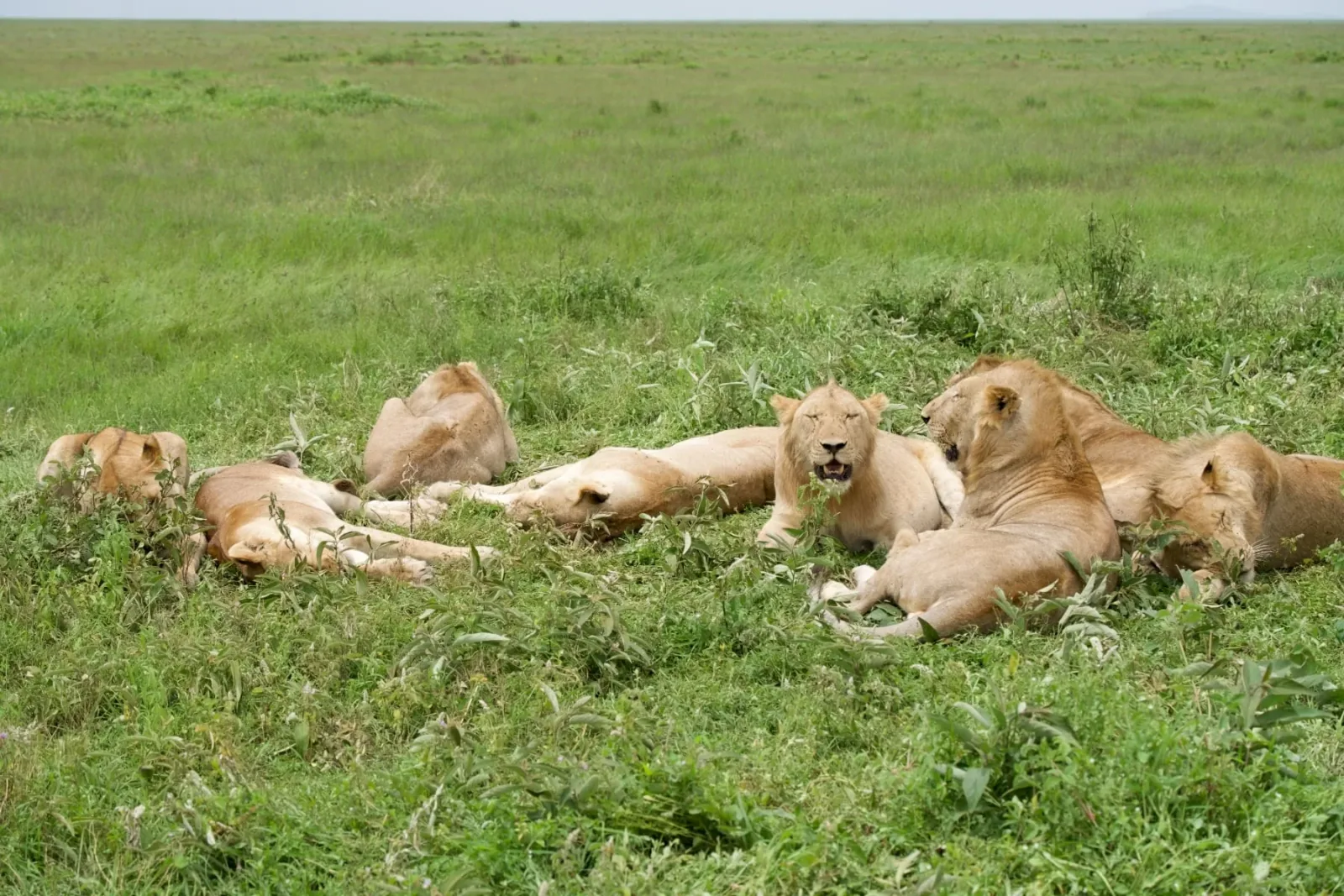
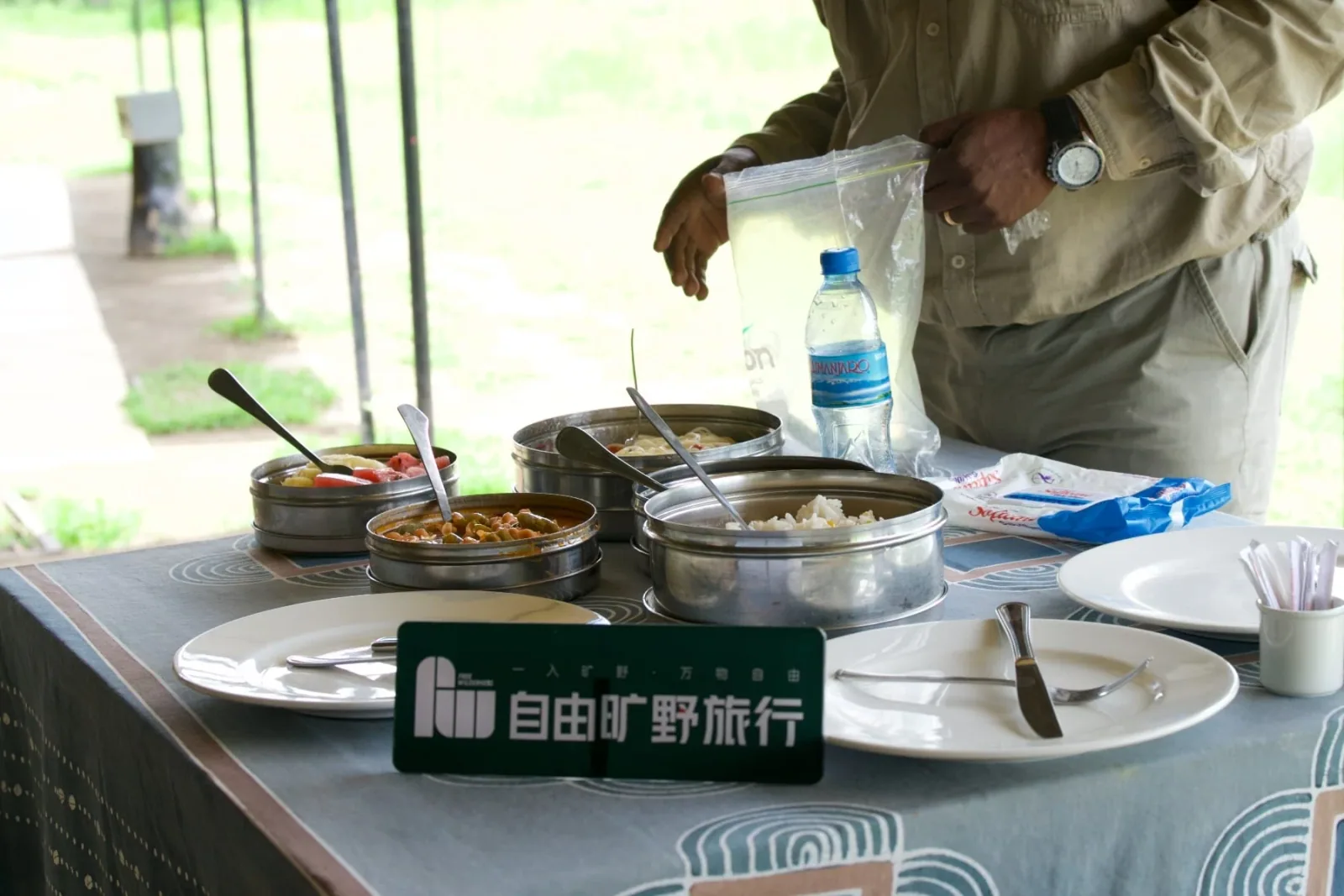
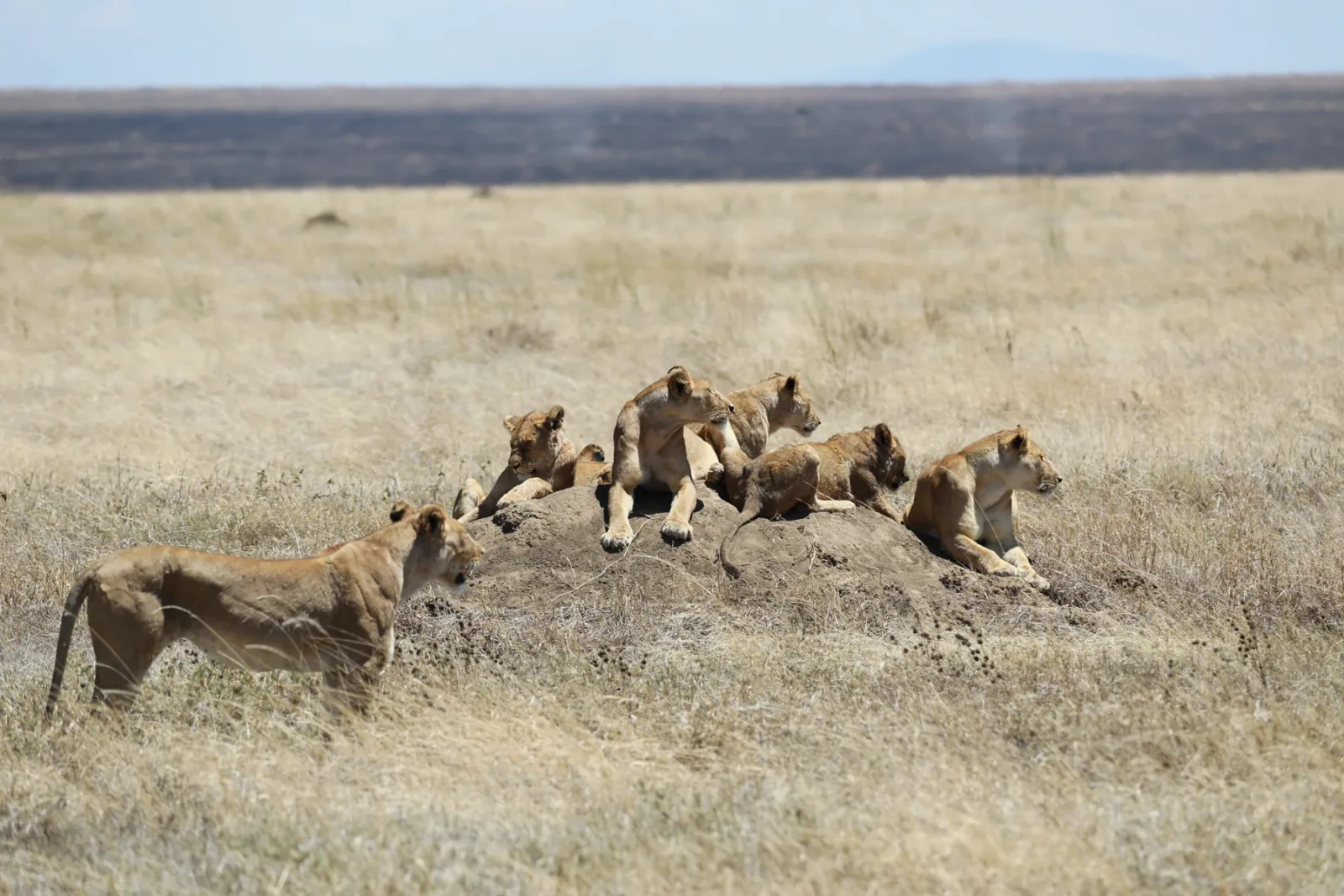
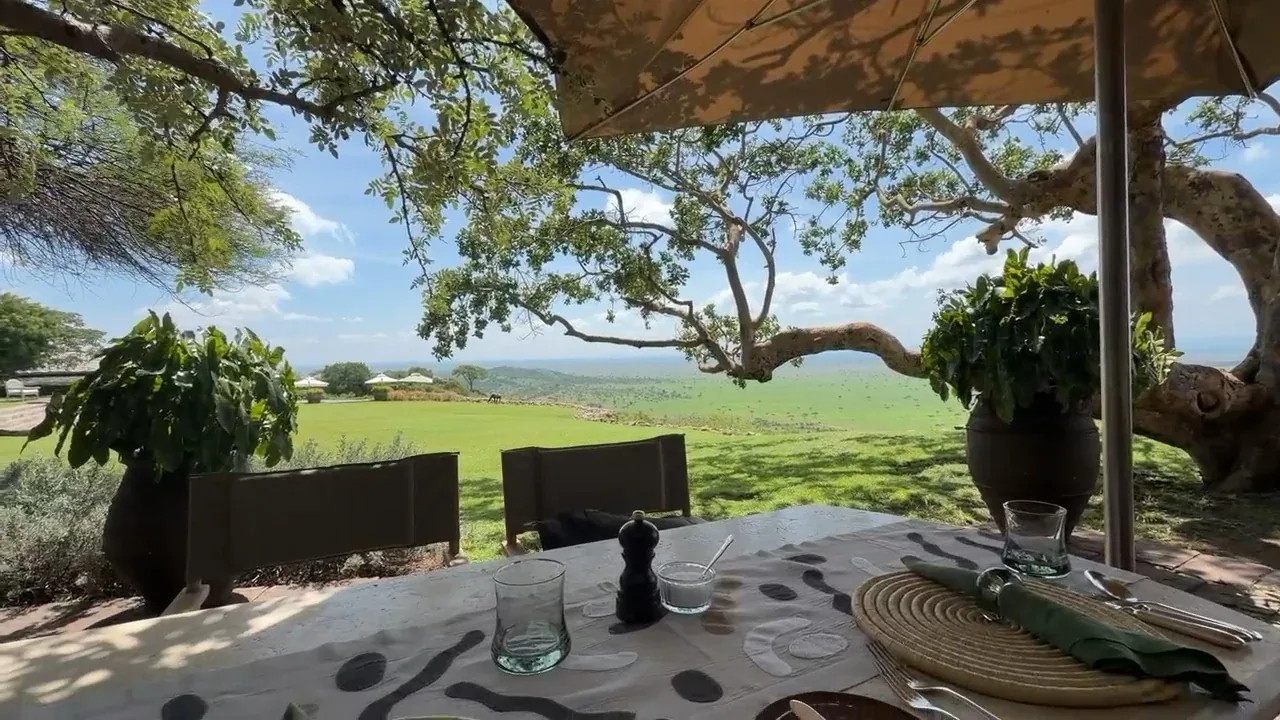
Wild lions resting near Ndutu, and lunch on a game drive. Photographed on a Free Wilderness field inspection.
How to count a full safari day: arrival day counts as half at best, and departure day has almost no drive time. Strip those out and what remains is the time you can actually spend looking for wildebeest and big cats.
Two nights = one full safari day. Three nights = two. The difference is not how comfortable the camp is, but whether you have a second morning to go back when the herds move.
2. Look at camp location and transfers together when booking
- Check rooms and flights in parallel. Give your consultant one set of preferred dates and one set that can shift a day either way, and check Ndutu availability against international flights at the same time. Traveling with children, pass on ages, room type and extra-bed needs to the camp up front.
- Ask where the game drives start. Have your consultant mark the camp's position for that month, the usual game-drive areas, and the transfer point if you go by road or by light aircraft. Then confirm how much drive time is left on arrival day and departure day.
- Confirm the bookings with payment deadlines together. Check how long the camp will hold the rooms, which airstrip the internal flight uses, and whether the return connects to your international flight. Only then pay anything non-refundable. If Ndutu is full, look first at a neighbouring camp in the same game-drive area, or try shifting your dates by a day or two.
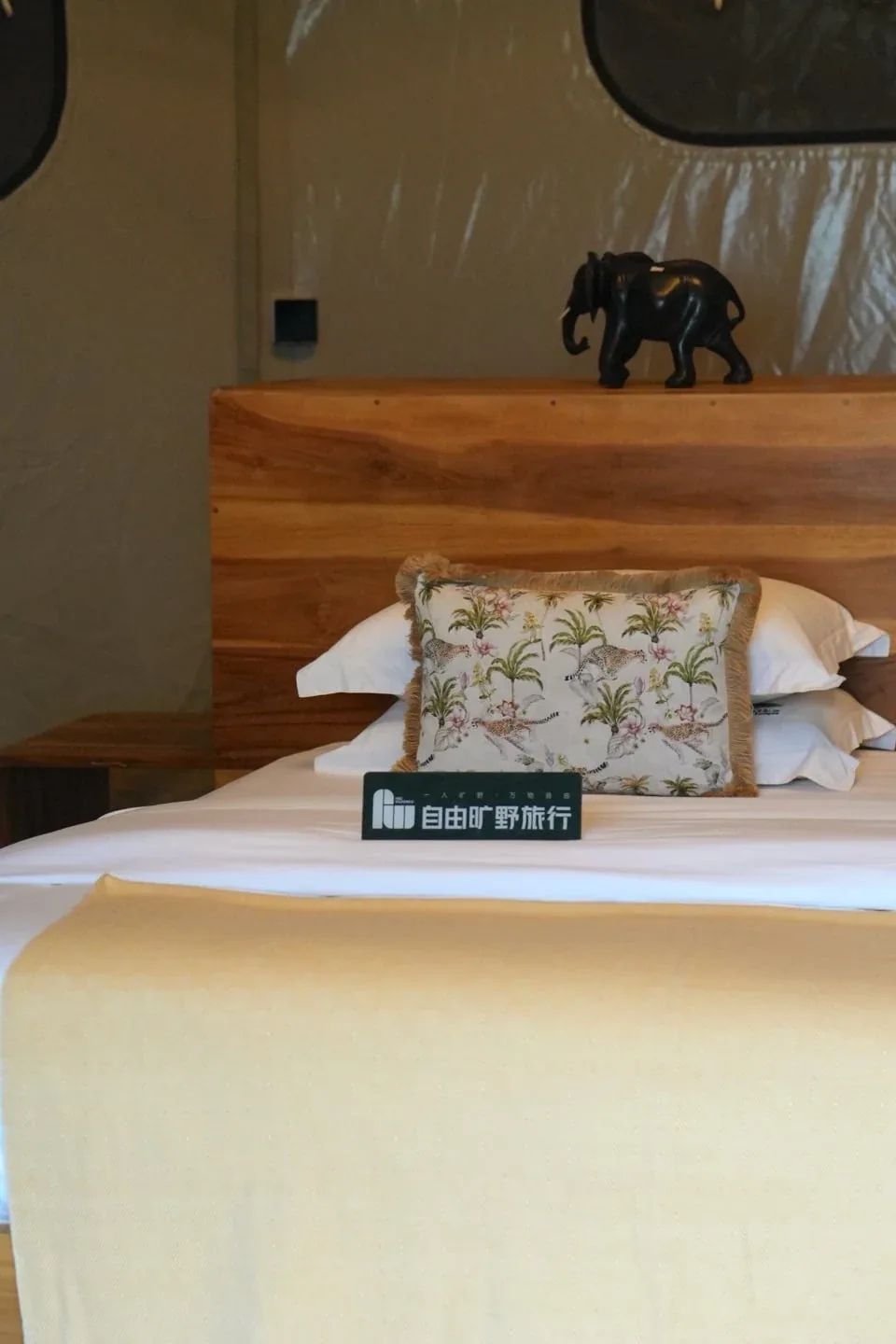
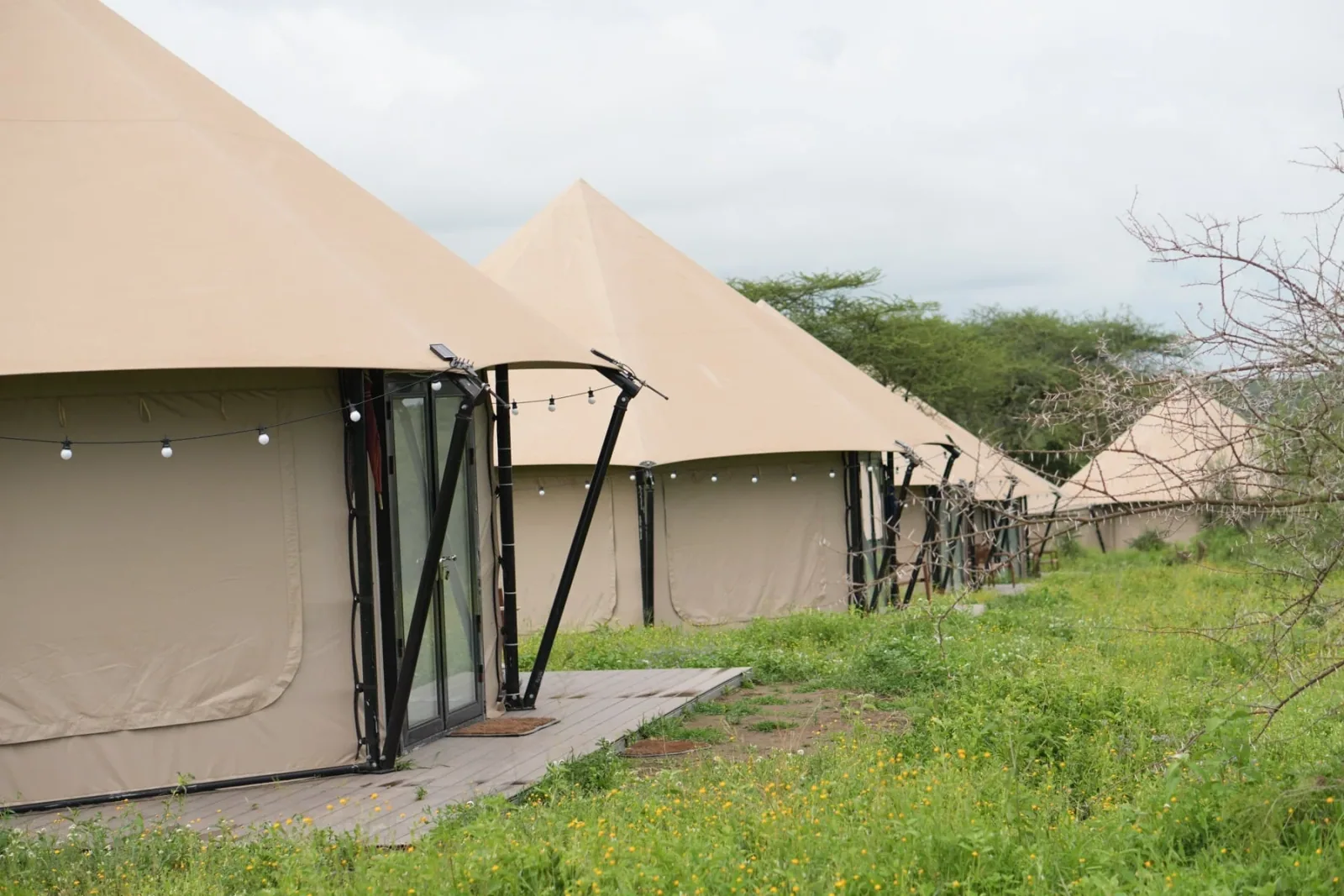

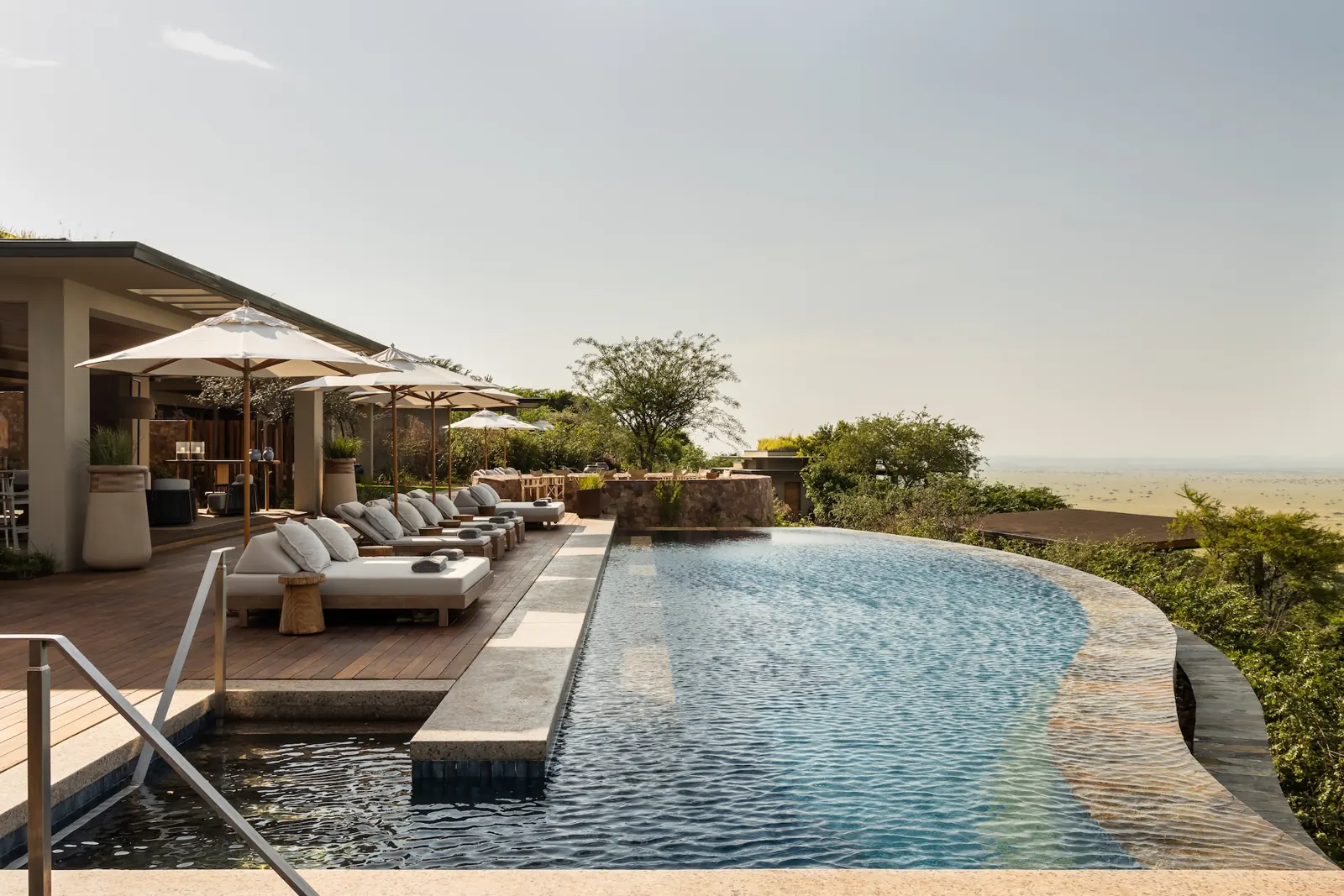
Tents, room and dinner at a Ndutu camp. Photographed on a Free Wilderness field inspection.
3. Why Ndutu deserves its own nights
In calving season Ndutu is a moving patch of grass: the herds may be on these short-grass plains today and over the next ridge tomorrow. Stay close and you can reach them at first light before the group disperses. Stay far and you spend the best light on the road.
That is why "two nights" is not the same everywhere: a camp in the Ndutu core area, one on the edge of it, and one in a neighbouring game-drive area give you different amounts of actual safari time. Discuss location in the same conversation as dates.
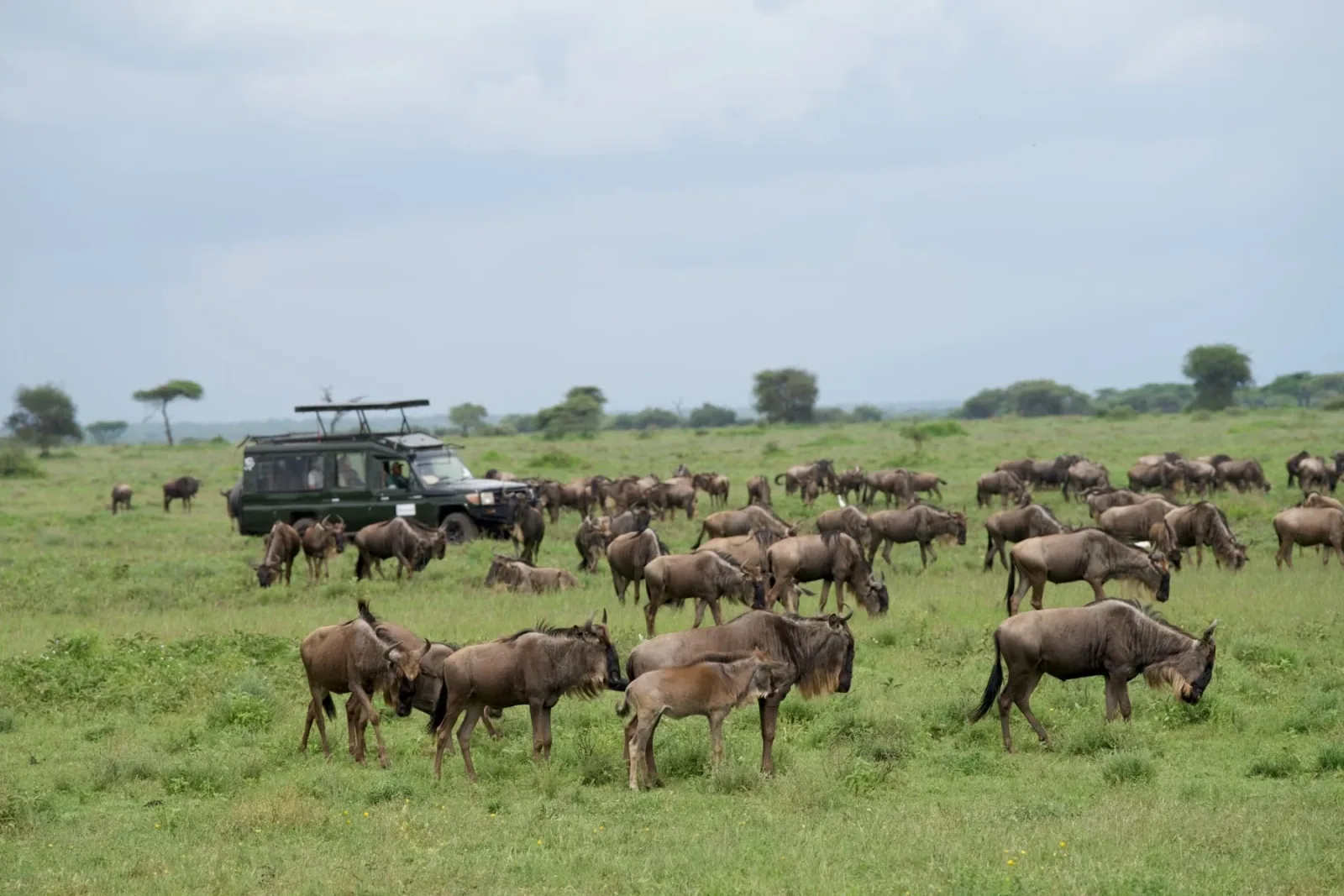
Wildebeest on the Ndutu grassland, with a calf in the foreground. Photographed on a Free Wilderness field inspection.
4. What to bring to your consultant
If you are comparing Spring Festival routes, tell your Free Wilderness consultant which dates you can travel, how many people are coming, and which animals you most want to see. We can then compare how much safari time two nights and three nights at Ndutu actually leave, based on live availability and transfer conditions.
Only three things really need settling in advance: which days are full safari days, where the camp sits in that particular month, and whether the departure day connects cleanly to your international flight. Get those in order and two nights versus three stops being a gut call.
FAQ
QIf we stay near the Ngorongoro Crater, can we also safari at Ndutu?
The two connect on the same northern route, but the Ndutu plains and the crater floor are two separate game-drive areas. If you want early departures or a longer evening at Ndutu, stay locally and plan the crater as its own day.
QWill we definitely see wildebeest giving birth at Spring Festival?
Calving is chance. January to March is the concentrated window, but which day and which patch of grass depends on that year's rain and herd movement. Widen the goal to the herds, the calves and everyday savanna activity and a full day in the vehicle feels much calmer.
QAre two nights at Ndutu enough?
Arriving in the afternoon and leaving on the morning of day three, two nights give exactly one full safari day. That can work for tight leave and a Ngorongoro Crater day. If the migration is the priority, or older family members and children want a midday break at camp, three nights at the same camp gives two full days.
QDoes camp location really change how much safari time you get?
Yes. The Ndutu core area, its edges and neighbouring game-drive areas differ noticeably in how long it takes to reach the herds at first light. In calving season the herds move daily, so a closer camp gets you there while the light and the animals are at their best. Confirm location alongside the dates.
Related Content & Itineraries
Interested in Africa?
Contact our dedicated travel consultant for a free one-on-one consultation and a bespoke African safari itinerary.
Plan My Trip