What to bring for a first Tanzania safari? Drawing on real Tanzania safari travel experience, Free Wilderness compiles a complete pre-trip checklist to help first-time visitors to the Serengeti, Ngorongoro, Tarangire and Zanzibar pack efficiently.
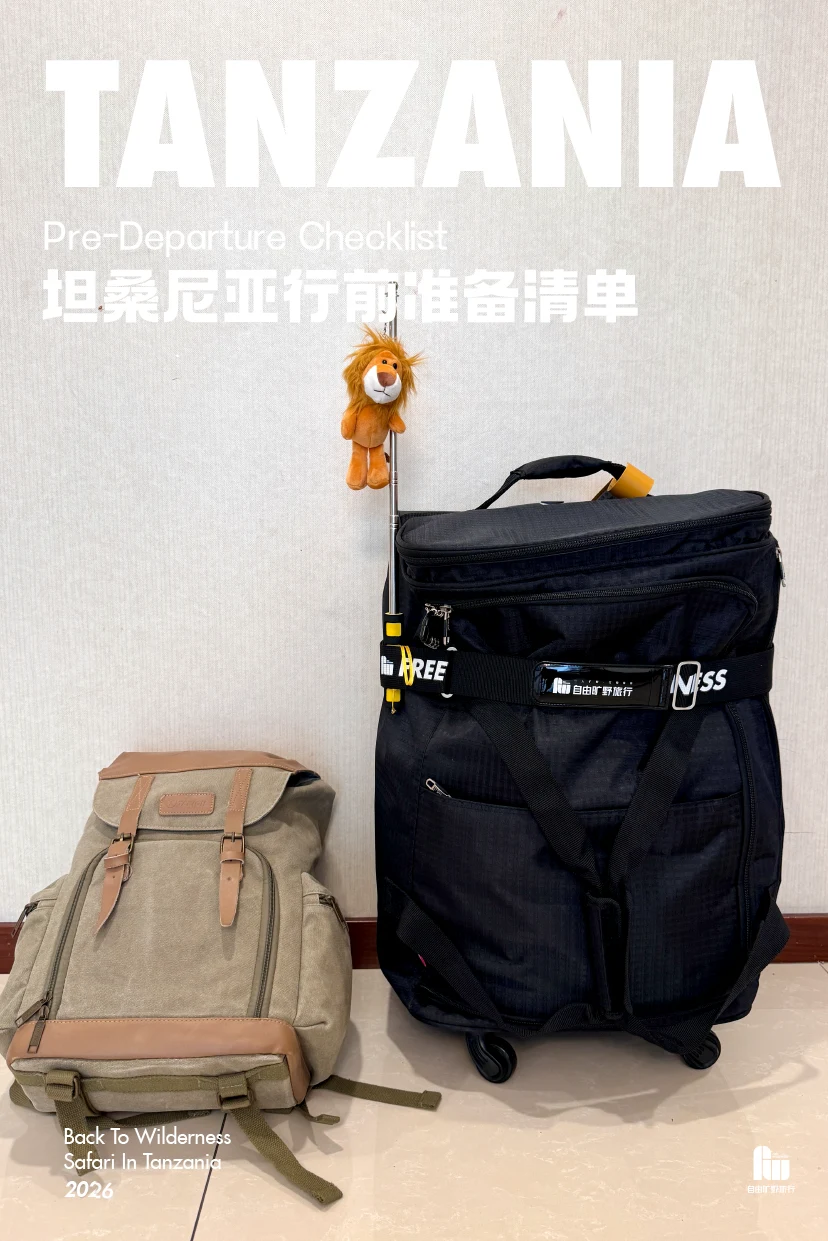
What should you pack to see the Great Migration in Tanzania? Free Wilderness lists it all for you to follow!
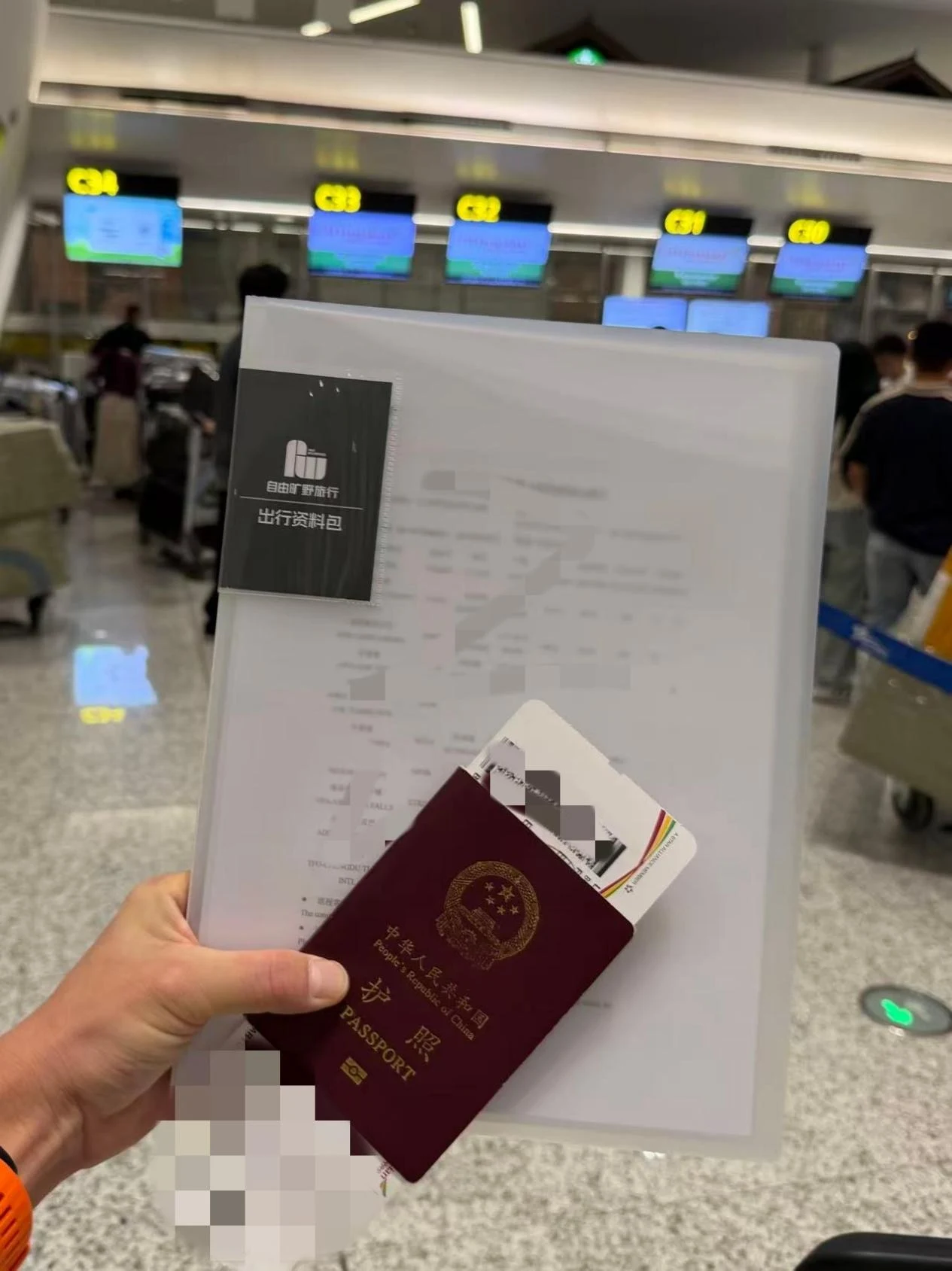
1. Important items for Tanzania safari
- 1. Original passport (valid at least 6 months, at least 2 blank visa pages)
- 2. Valid yellow book / official non-vaccination declaration
- 3. ID card
- 4. Appropriate USD cash (new notes issued after 2006)
- 5. Foreign currency credit card (VISA/MASTER)
Free Wilderness organizes important documents into a custom folder with clear labels, so guests can depart worry-free.
Images are for reference only; actual documents prevail.
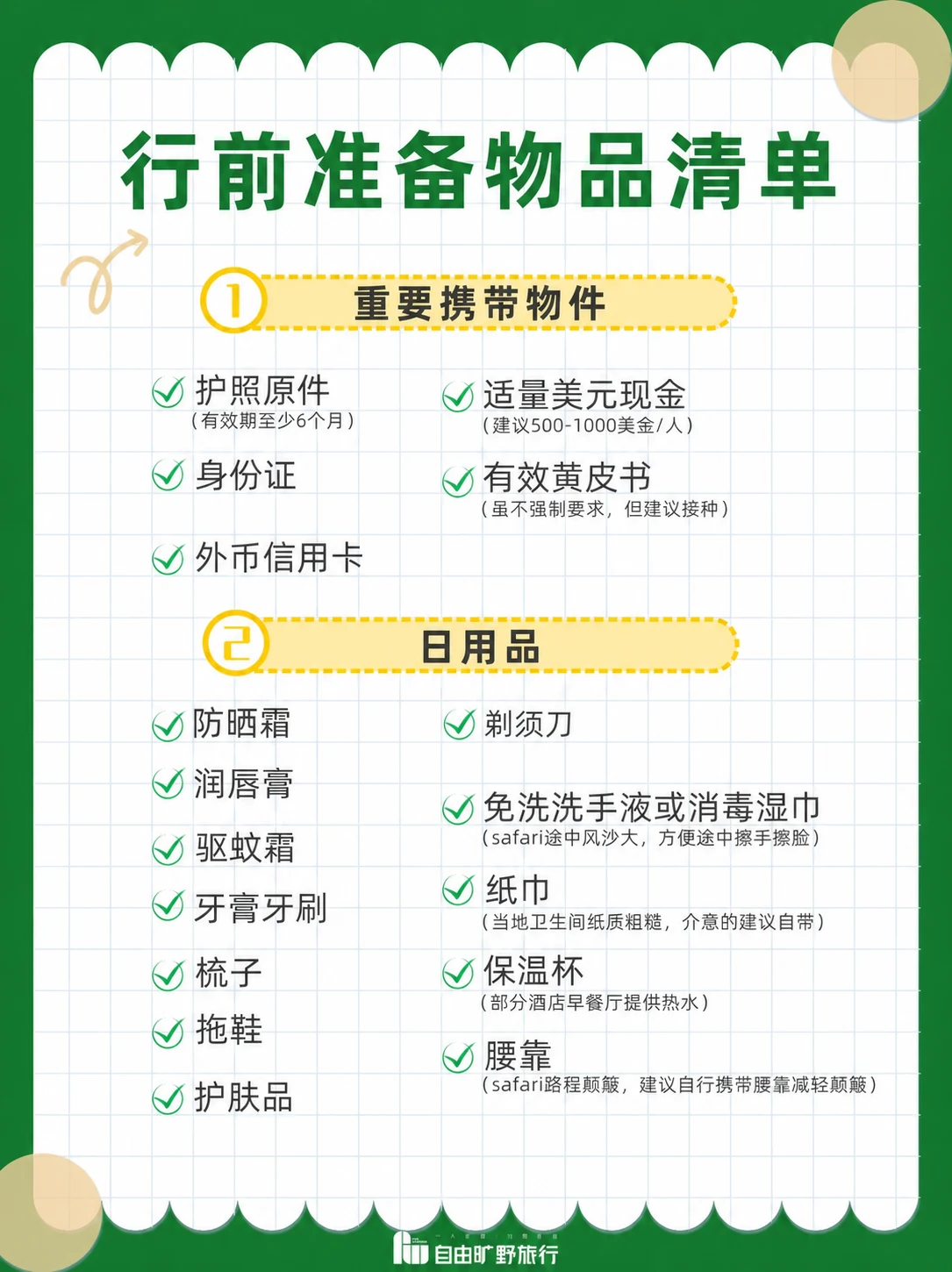
2. Daily necessities for Tanzania safari
Most safari time is spent in national parks and camps, so small items easy to buy in cities are hard to replenish on the savanna. Prepare:
- Sunscreen
- Physical sun protection such as a sun mask / multifunctional headwear, plus sunglasses, sun sleeves and a sun hat (Tanzania's direct sun means sunscreen alone is not enough)
- Lip balm
- Mosquito repellent
- Toothpaste
- Toothbrush
- Comb
- Slippers (long time on planes and safari vehicles; slippers free your feet)
- Skincare products
- Toiletries (especially conditioner — Tanzania's dirt roads coat your hair in dust)
- Cosmetics
- Razor
- Hand sanitizer or wet wipes (for wiping hands and face during dusty drives)
- Tissues (local toilet paper is coarse)
- Thermos (some hotels offer hot water at breakfast)
- Lumbar cushion (safari roads are bumpy)
- UK plug adapter (Tanzania uses British three-pin sockets; Free Wilderness prepares adapters for guests)
- Sanitary products (hard and expensive to buy in Tanzania)
- Waterproof phone/camera case (useful for dolphin watching and snorkeling if Zanzibar is included)
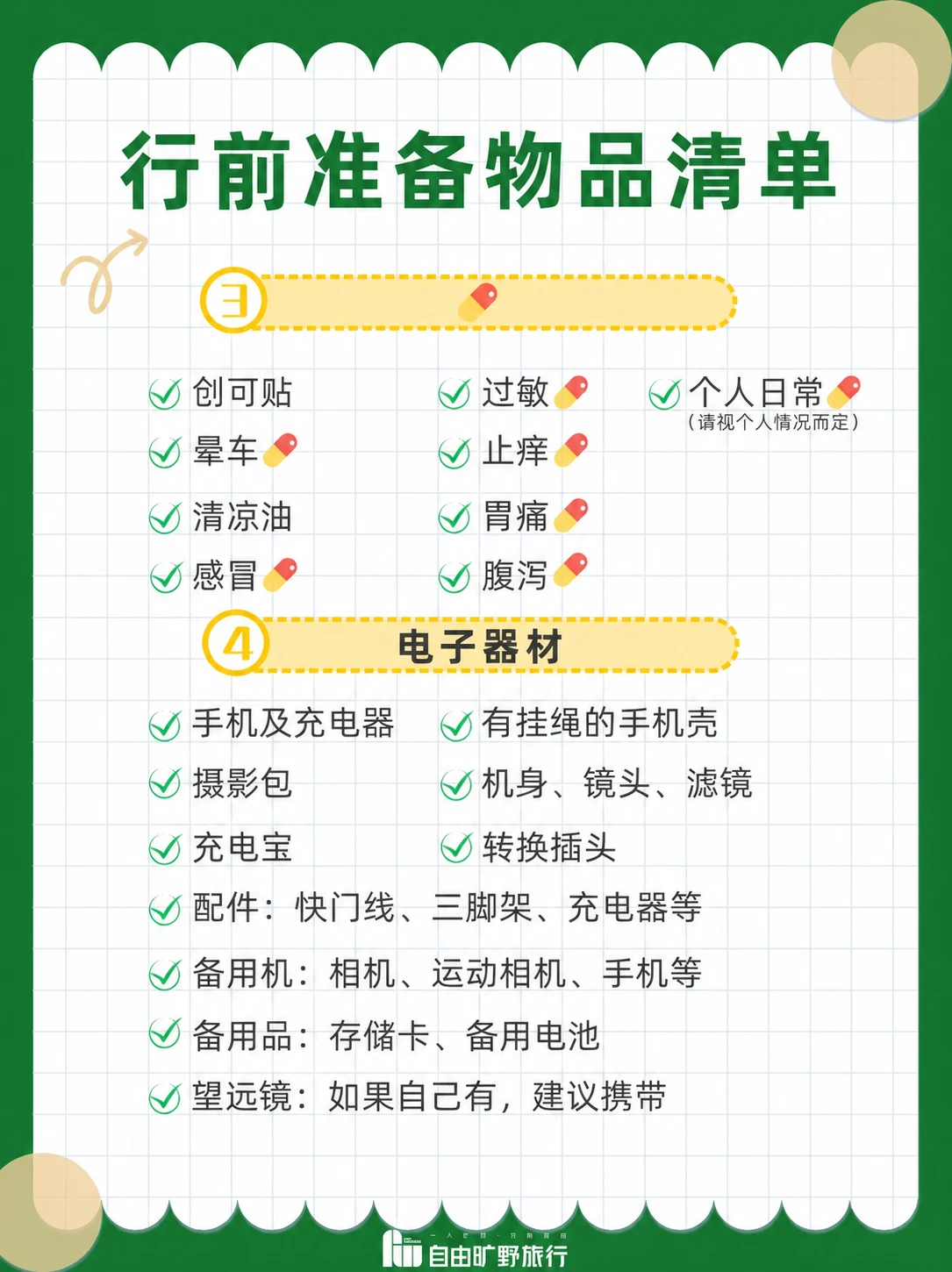
3. Common medicines for Tanzania safari
- Band-aids
- Motion sickness medicine (cooling balm, motion-sickness patches)
- Stomach medicine
- Cooling balm
- Anti-diarrhea medicine (berberine, smecta)
- Cold medicine
- Mosquito-bite medicine (repellent patches, repellent lotion)
- Daily medicine (digestive aids, eye drops)
- Allergy medicine (as personally needed)
- First-aid kit (iodine, gauze, bandages, hemostatic and anti-inflammatory medicine)
4. Electronics for safari
- Phone and charger
- Phone case with lanyard (prevents dropping on bumpy roads)
- Power bank
- Camera bag
- Body, lenses, UV filter
- Accessories: shutter release, tripod, charger, etc.
- Spares: memory cards, spare batteries
- Backup camera: DSLR, mirrorless, GoPro, phone, etc.
- Binoculars: bring your own if you have them
📷 About camera lenses: if you like photographing animals, bring a 400mm+ telephoto lens for wildlife and a standard lens for wide scenes.
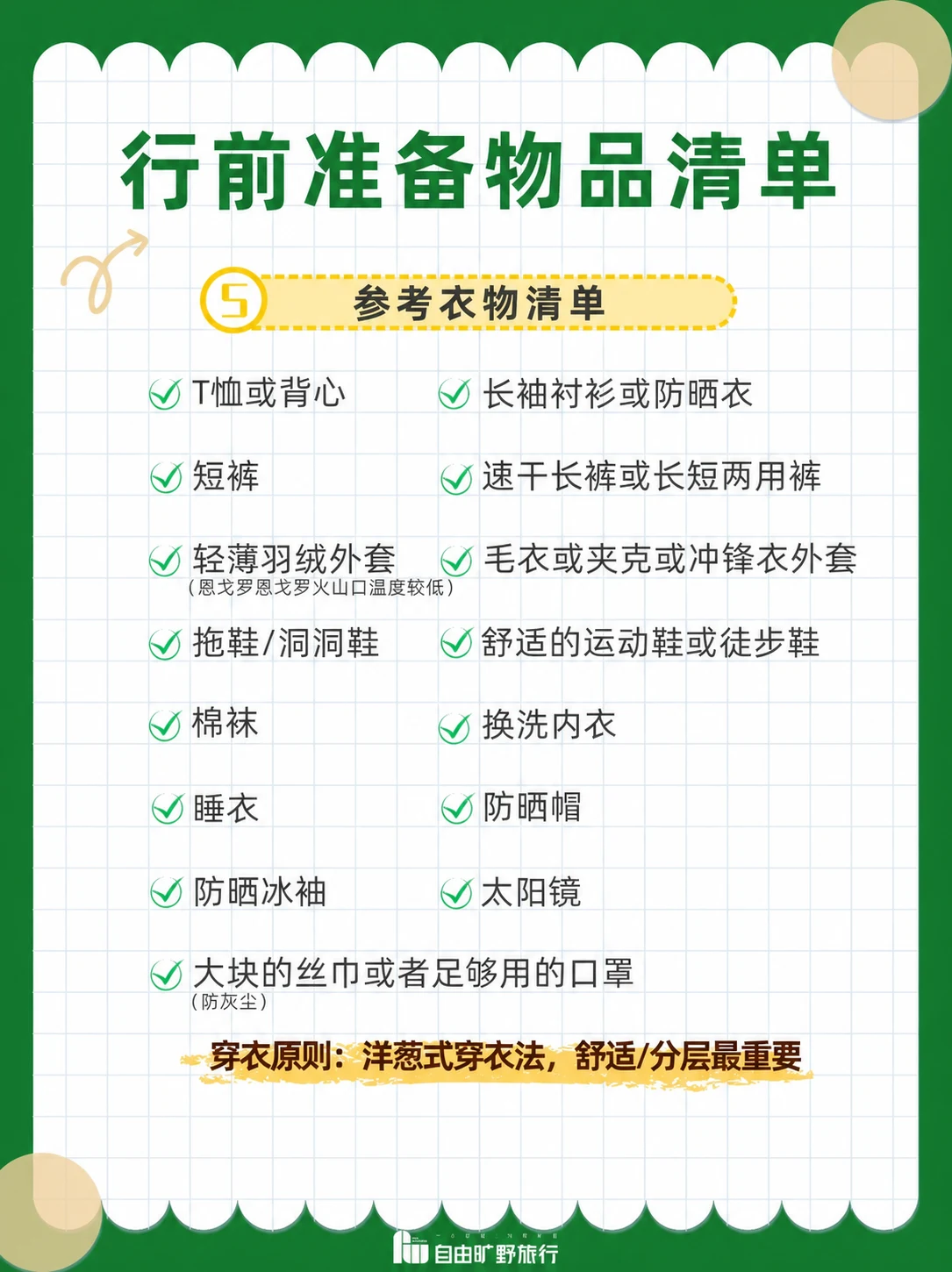
5. What to wear for Tanzania safari
The most important principle is layering. Tanzania is not hot all day — especially Serengeti dry-season mornings, high-altitude Ngorongoro, and early mornings/nights at camp can feel noticeably cold. Prepare:
- T-shirt or tank top
- Long-sleeve shirt / sun-protective layer
- Shorts
- Quick-dry pants / convertible pants
- Sweater / jacket / outer shell
- Light down jacket (Ngorongoro is cold morning and evening)
- Comfortable sneakers / hiking shoes
- Sandals / flip-flops
- Cotton socks
- Extra underwear
- Pajamas
- Sun hat
- Sun sleeves
- Sunglasses
- Mask (dust & sun protection)
- Swimsuit (for Zanzibar)
6. Boarding notes
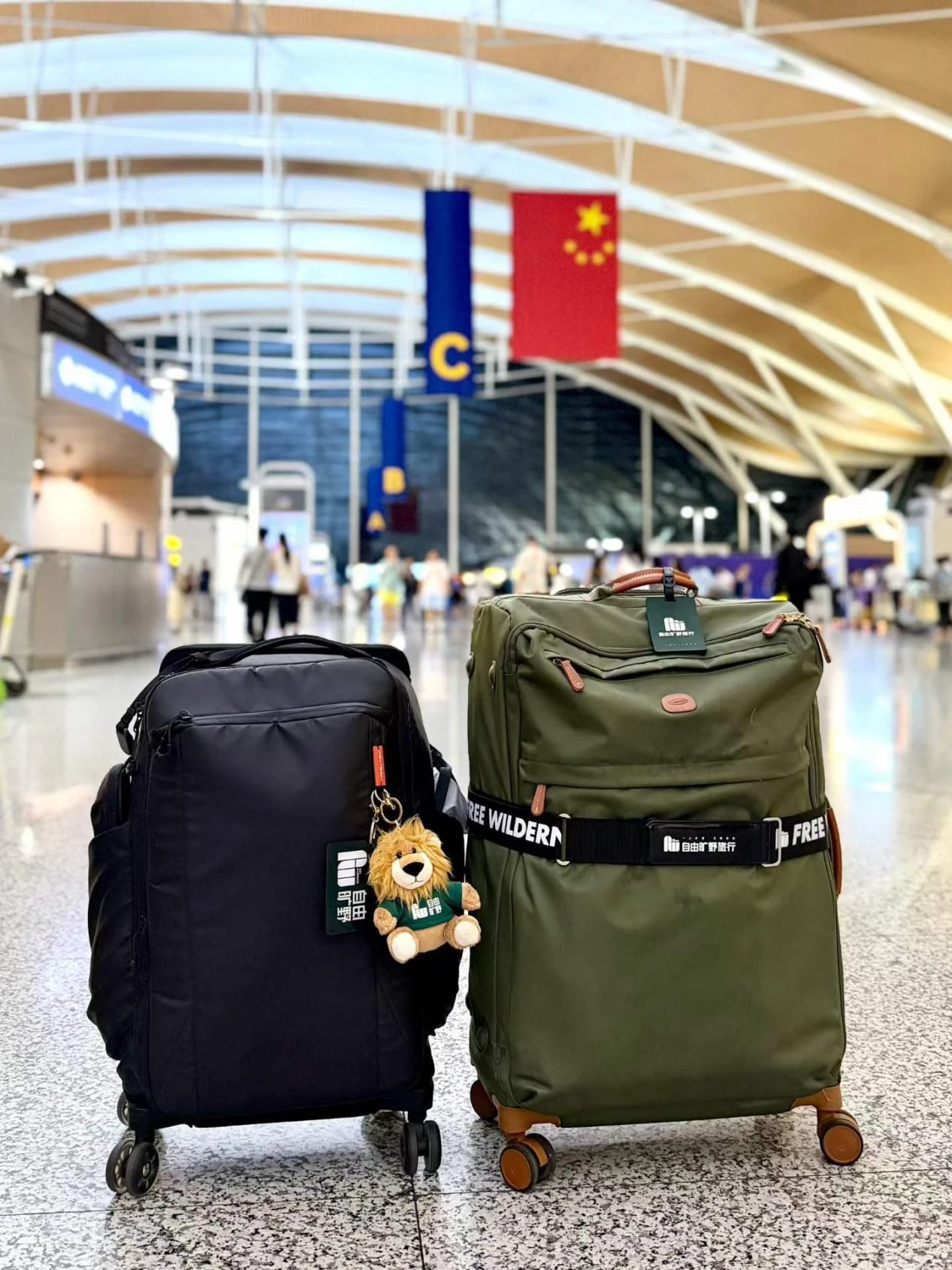
Luggage standards
Domestic connecting flights limit checked luggage to 15-20kg (⚠️ each small-aircraft airline differs — ask your travel consultant).
- Use soft bags; hard-shell or overweight luggage cannot board
- Avoid valuable luggage: national parks have dirt roads that wear bags down
💡 Tip: Tanzania and Kenya both have plastic bag bans — don't bring any plastic bags except for masks/medicine packaging.
FAQ
QHow should I dress for safari?
Safari is casual and relaxed — wear comfortable, easy-to-wash, quick-dry clothes and layer short sleeves, long sleeves and a jacket, adjusting with temperature. Choose earth tones (light gray, light green, khaki) and avoid bright red/pink/yellow and dark blue/black to deter tsetse flies. Sun protection (wide-brim hat, sun layers, sunglasses, sunscreen) and mosquito protection (repellent, long sleeves after sunset) are essential.
QDo I need to bring binoculars?
Not mandatory but recommended. Each safari vehicle usually has one binocular (often with the guide). If you have your own, bring it — entry-level options include Xinai 12×50, olimt 8×25 and Foresters 8×30; advanced options include Kowa BD 10×42.
QWhat is the luggage weight limit on Tanzania domestic flights?
Generally 15-20kg for checked luggage on domestic connections, but each small-aircraft airline differs — ask your travel consultant in advance. Use soft bags; hard-shell or overweight luggage cannot board. Avoid valuable luggage since park roads are rough.
QWhat important documents do I need for Tanzania?
Original passport (valid 6+ months, 2+ blank visa pages), valid yellow book or non-vaccination declaration, ID card, appropriate USD cash (notes issued after 2006), and a VISA/MASTER credit card.
Interested in Africa?
Contact our dedicated travel consultant for a free one-on-one consultation and a bespoke African safari itinerary.
Plan My Trip